
2" Furring Channel.Metallic materials at high temperatures
2022-10-08
2" Furring Channel.Metallic materials at high temperatures. Compared with ceramics and compounds with covalent or ionic bonds, the properties of interatomic bonds make the diffusivity of atoms in metals higher.
This high diffusivity makes the metal structure adjustable on different length scales, but it also brings instability of structure and customized performance. This instability is the main bottleneck in the development of metal materials, which greatly limits their technical application at high temperature.
On Aug. 6, local time, the top academic journal Science (Science) published a research report (Report) entitled "Suppressing atomic diffusion with the Schwarz crystal structure in supersaturated Al-Mg alloys" by the Institute of Metals of the Chinese Academy of Sciences, which provides a new way to solve the instability caused by high atomic diffusivity in metals at high temperatures.
The correspondent authors of the study are Academician Lu Ke, doctoral supervisor of the Institute of Metals, Chinese Academy of Sciences, and researcher Li Xiuyan.
Luke has devoted himself to the research of metal nanomaterials for more than 20 years, published more than 400 papers in academic journals, and obtained more than 40 invention patents. He has won the Acta Materialia Gold Medal, the Humboldt Research Award in Germany, the Outstanding Young Scholars Award of the first Hong Kong Qiushi Foundation, the ISMANAM Gold Medal of the International Metastable and Nanomaterials Annual Conference, the Chinese Young Scientist Award, the Ho Liang Ho Foundation Science and Technology Progress Award, and the TWNSO Technology Award of the third World Academy of Sciences. In 2020, Luke won the Future Science Award "material Science Award" for his groundbreaking discovery and use of nano-twin structure and gradient nanostructure to achieve high strength, high toughness and high conductivity of copper metal.
Since October 2018, Lu Ke has been the vice governor of the people's Government of Liaoning Province, responsible for science and technology, sports and other fields. In charge of Liaoning Provincial Department of Science and Technology (Bureau of Foreign experts), Sports Bureau, important technological innovation and R & D base construction engineering center (Industrial Technology Research Institute).
It is written that because of the nature of interatomic bonds, the atomic diffusivity in metals is significantly higher than that of ceramics and compounds with covalent or ionic bonds. In the process of synthesis and subsequent treatment, by adjusting the diffusion control process, the structure is highly adjustable on different length scales, so that the metal materials have a wide range of properties. For example, aluminum alloy hardens by precipitation of intermetallic compounds near room temperature. In thermomechanical treatment, the strength and plasticity of steel can be widely adjusted by controlling diffusion phase transformation.
However, when the metal is exposed to high temperature or mechanical load, the high atomic diffusivity makes the structure and customized performance of the metal unstable. This instability is the main bottleneck in the development of metal materials, which greatly limits their technical application at high temperature.
Suppressing the diffusion of atoms in metals is a challenge, especially at high temperatures, the team said. The interface or grain boundary (GBs) associated with a more open structure is considered to be a fast diffusion channel of atoms relative to the lattice. The diffusion along the GB can be slowed down by optimizing the GB segregation of other elements. However, with the increase of the degree of alloying, the formation of the second phase increases, and the interfacial alloying is also limited.
This high diffusivity makes the metal structure adjustable on different length scales, but it also brings instability of structure and customized performance. This instability is the main bottleneck in the development of metal materials, which greatly limits their technical application at high temperature.
On Aug. 6, local time, the top academic journal Science (Science) published a research report (Report) entitled "Suppressing atomic diffusion with the Schwarz crystal structure in supersaturated Al-Mg alloys" by the Institute of Metals of the Chinese Academy of Sciences, which provides a new way to solve the instability caused by high atomic diffusivity in metals at high temperatures.
The correspondent authors of the study are Academician Lu Ke, doctoral supervisor of the Institute of Metals, Chinese Academy of Sciences, and researcher Li Xiuyan.
Luke has devoted himself to the research of metal nanomaterials for more than 20 years, published more than 400 papers in academic journals, and obtained more than 40 invention patents. He has won the Acta Materialia Gold Medal, the Humboldt Research Award in Germany, the Outstanding Young Scholars Award of the first Hong Kong Qiushi Foundation, the ISMANAM Gold Medal of the International Metastable and Nanomaterials Annual Conference, the Chinese Young Scientist Award, the Ho Liang Ho Foundation Science and Technology Progress Award, and the TWNSO Technology Award of the third World Academy of Sciences. In 2020, Luke won the Future Science Award "material Science Award" for his groundbreaking discovery and use of nano-twin structure and gradient nanostructure to achieve high strength, high toughness and high conductivity of copper metal.
Since October 2018, Lu Ke has been the vice governor of the people's Government of Liaoning Province, responsible for science and technology, sports and other fields. In charge of Liaoning Provincial Department of Science and Technology (Bureau of Foreign experts), Sports Bureau, important technological innovation and R & D base construction engineering center (Industrial Technology Research Institute).
It is written that because of the nature of interatomic bonds, the atomic diffusivity in metals is significantly higher than that of ceramics and compounds with covalent or ionic bonds. In the process of synthesis and subsequent treatment, by adjusting the diffusion control process, the structure is highly adjustable on different length scales, so that the metal materials have a wide range of properties. For example, aluminum alloy hardens by precipitation of intermetallic compounds near room temperature. In thermomechanical treatment, the strength and plasticity of steel can be widely adjusted by controlling diffusion phase transformation.
However, when the metal is exposed to high temperature or mechanical load, the high atomic diffusivity makes the structure and customized performance of the metal unstable. This instability is the main bottleneck in the development of metal materials, which greatly limits their technical application at high temperature.
Suppressing the diffusion of atoms in metals is a challenge, especially at high temperatures, the team said. The interface or grain boundary (GBs) associated with a more open structure is considered to be a fast diffusion channel of atoms relative to the lattice. The diffusion along the GB can be slowed down by optimizing the GB segregation of other elements. However, with the increase of the degree of alloying, the formation of the second phase increases, and the interfacial alloying is also limited.
Low Profile Metal Bed Frame.The production and sales of new energy vehicles recovered rapidly after the epidemic
Metal Studs Home Depot.Deformation strengthening of metallic materials After cold working deformation such as rolling
Related Article

Ceiling wall angle, also known as perimeter angle or L-angle, is an indispensable L-shaped metal profile for suspended drywall ceiling systems. Roll-formed from cold-rolled galvanized steel, ceiling wall angle is fixed along the wall perimeter to support the ends of main channels and furring channels,
Ceiling Wall Angle – Galvanized L-Shaped Perimeter Trim for Suspended Drywall Ceilings
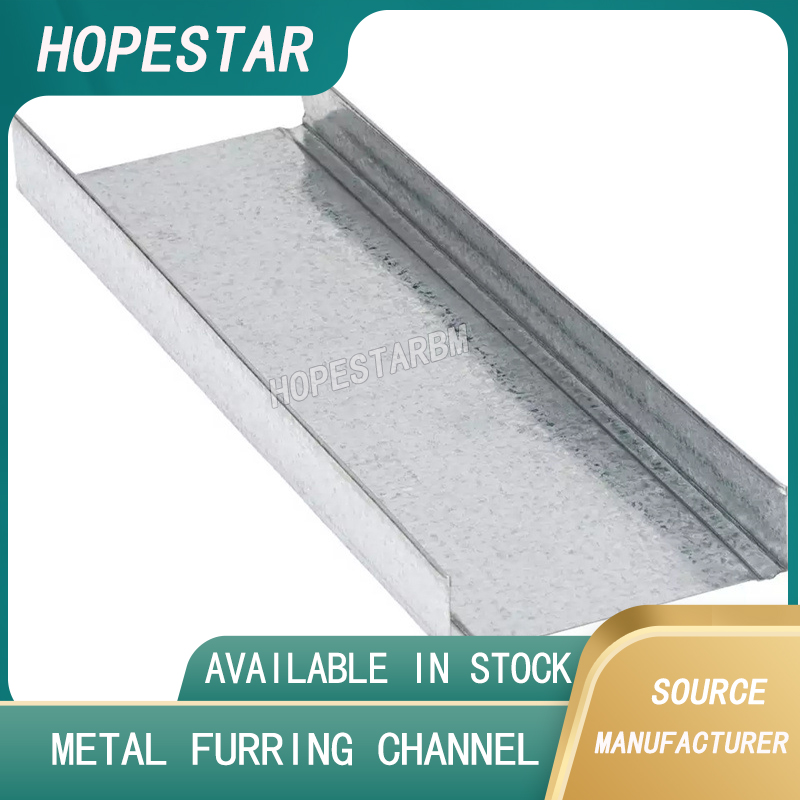
Galvanized steel profiles are the foundational metal framing components widely used in modern interior construction. Roll-formed from cold-rolled steel coated with protective zinc layer, galvanized steel profiles cover a full range of shapes including C studs, U tracks, omega channels,
Galvanized Steel Profiles – Reliable Cold Rolled Framing for Drywall Walls and Ceilings

Metal furring channel for ceiling is a vital secondary framing component widely used in suspended ceiling and drywall ceiling systems. Roll-formed from cold-rolled galvanized steel, this lightweight metal profile works together with main channels, hangers and wall angles to create a level,
Metal Furring Channel for Ceiling – Galvanized Secondary Framing for Suspended Drywall Ceilings

Metal omega channel, also widely called omega furring channel or hat channel, is an indispensable secondary metal framing profile for modern suspended ceilings and drywall wall furring systems. Named after its distinctive Ω shape, this profile is roll-formed from cold-rolled galvanized steel
Metal Omega Channel – Galvanized Omega Furring Channel for Drywall Ceiling and Wall Framing