
Top cross rail suspension clip
2024-08-19
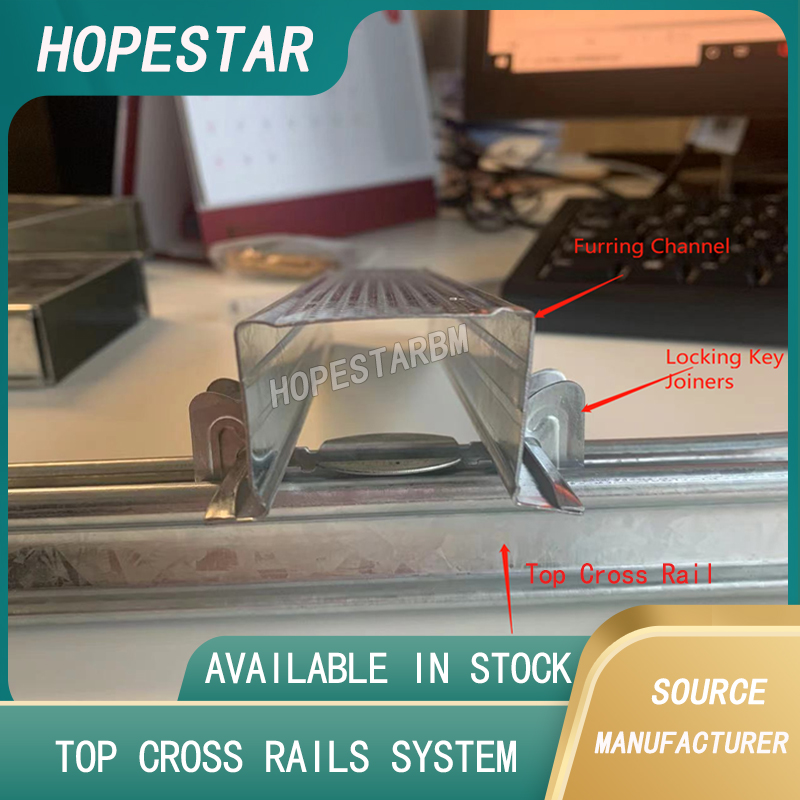
A top cross rail suspension clip is a component used in suspended ceiling systems, particularly in grid or drop ceilings. These systems are commonly used in commercial buildings and some residential spaces where a secondary ceiling is installed below the structural ceiling. Here's how it fits into the system:
Purpose and Function:
Support Structure: The top cross rail suspension clip is used to attach and support the cross tees (or cross rails) in a suspended ceiling grid. Cross tees are the horizontal elements that span between the main runners or primary support beams in the ceiling grid.
Support Structure: The top cross rail suspension clip is used to attach and support the cross tees (or cross rails) in a suspended ceiling grid. Cross tees are the horizontal elements that span between the main runners or primary support beams in the ceiling grid.
Attachment to Main Runners: The clip typically snaps or locks into the main runners, helping to secure the cross tees in place. This ensures that the grid is stable and can support the ceiling tiles or panels.
Maintaining Alignment: The clip also helps maintain the proper spacing and alignment of the cross tees, ensuring that the grid system is square and the ceiling tiles or panels fit properly.
Ease of Installation: Suspension clips are designed for quick and easy installation, often allowing for snap-in or slide-in attachment, which can speed up the installation process.
Typical Uses:
Commercial Buildings: In offices, schools, hospitals, and retail spaces where suspended ceilings are common.
Residential Applications: Sometimes used in basements or other areas where a drop ceiling might be installed for aesthetic or practical reasons, such as hiding ductwork or wiring.
Installation Considerations:
Compatibility: Ensure that the suspension clips are compatible with the specific grid system being used. Different manufacturers may have slightly different designs.
Load-Bearing: The clips should be able to support the weight of the ceiling tiles or panels, so it's important to choose the right type for the specific application.
Spacing and Alignment: Proper spacing and alignment are critical for a professional-looking ceiling, so following the manufacturer's guidelines is essential.
In summary, top cross rail suspension clips are small but crucial components in the assembly of a suspended ceiling grid, ensuring that the structure is stable, properly aligned, and capable of supporting the ceiling tiles or panels.
What is a metal track?Description and Function
Can you use furring strips for a ceiling?
Related Article
Ceiling wall angle, also known as perimeter angle or L-angle, is an indispensable L-shaped metal profile for suspended drywall ceiling systems. Roll-formed from cold-rolled galvanized steel, ceiling wall angle is fixed along the wall perimeter to support the ends of main channels and furring channels,
Ceiling Wall Angle – Galvanized L-Shaped Perimeter Trim for Suspended Drywall Ceilings
Galvanized steel profiles are the foundational metal framing components widely used in modern interior construction. Roll-formed from cold-rolled steel coated with protective zinc layer, galvanized steel profiles cover a full range of shapes including C studs, U tracks, omega channels,
Galvanized Steel Profiles – Reliable Cold Rolled Framing for Drywall Walls and Ceilings

Metal furring channel for ceiling is a vital secondary framing component widely used in suspended ceiling and drywall ceiling systems. Roll-formed from cold-rolled galvanized steel, this lightweight metal profile works together with main channels, hangers and wall angles to create a level,
Metal Furring Channel for Ceiling – Galvanized Secondary Framing for Suspended Drywall Ceilings

Metal omega channel, also widely called omega furring channel or hat channel, is an indispensable secondary metal framing profile for modern suspended ceilings and drywall wall furring systems. Named after its distinctive Ω shape, this profile is roll-formed from cold-rolled galvanized steel
Metal Omega Channel – Galvanized Omega Furring Channel for Drywall Ceiling and Wall Framing