
Why Metal Furring Channels Define Modern Architectural Geometry
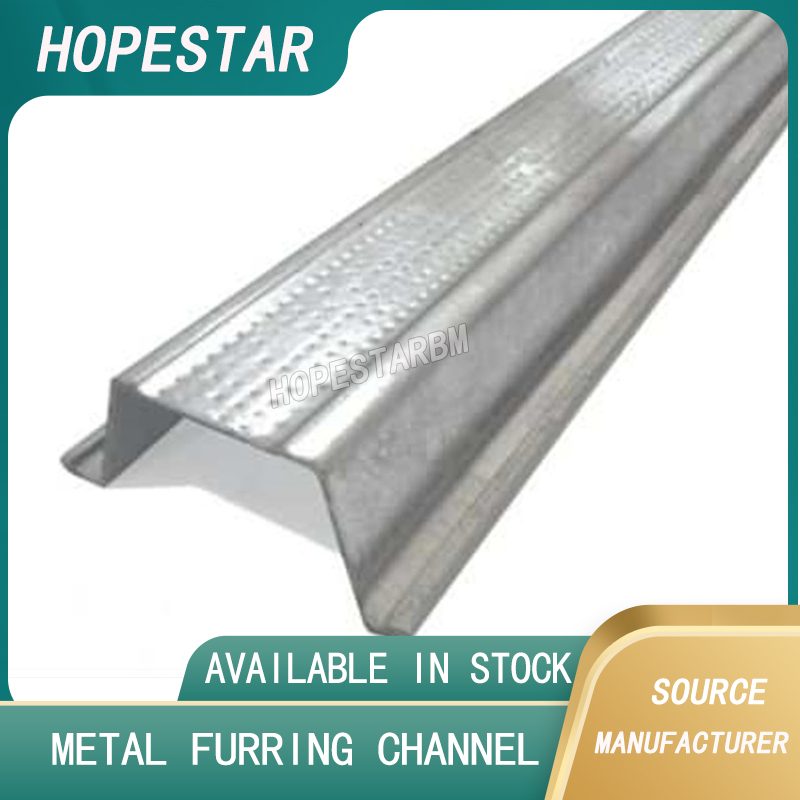
In the world of interior construction, the most critical components are often those that become invisible once the project is finished. While drywall provides the surface, the Metal Furring Channel—frequently referred to in the industry as "Hat Channel" due to its unique Omega-shaped profile—is the secret to achieving perfectly level ceilings and plumb walls in challenging environments.
If you are dealing with uneven masonry, concrete structures, or complex suspended ceiling designs, the metal furring channel is your most versatile ally. Let’s explore why this structural element is a game-changer for modern building projects.
What is a Metal Furring Channel?
A metal furring channel is a hat-shaped corrosion-resistant attachment used to "furr out" a surface. Unlike structural studs that form the skeleton of a wall, furring channels are typically used to create a secondary frame. They provide a flat, secure base for screw-attaching gypsum wallboard, allowing contractors to smooth out irregular surfaces or create voids for insulation and utilities.
1. Mastering Uneven Surfaces: The Masonry Solution
One of the primary challenges in construction is applying drywall to uneven masonry or concrete walls. You cannot simply glue drywall to a crooked brick wall and expect a premium finish.
By installing galvanized metal furring channels vertically against the masonry, you create a perfectly aligned plane. The space between the hat channel and the raw wall also serves a dual purpose: it allows for the installation of rigid foam insulation and provides a protected path for electrical conduit and data cables without the need to "trench" into the concrete.
2. The Standard for Suspended Ceilings
When it comes to professional ceiling installation, wood furring is a relic of the past. Metal furring channels are the standard for high-end suspended systems.
In a typical drop-ceiling configuration, these channels are clipped to cold-rolled main runners. This creates a rigid, lightweight grid that can support heavy drywall sheets while remaining perfectly level across massive spans. Because steel doesn't warp, shrink, or twist like timber, your ceiling remains crack-free and flat for the entire lifespan of the building.
3. Enhancing Acoustic Privacy (Decoupling)
Noise transfer is a major concern in multi-family residential and office buildings. Metal furring channels play a vital role in soundproofing. By using these channels to "decouple" the drywall from the structural joists or studs, you break the path of vibration. For even higher performance, these channels can be used in conjunction with sound isolation clips, significantly reducing the transmission of footfall noise and airborne sounds between floors.
4. Durability in Harsh Environments
Unlike wood furring strips, which are susceptible to rot, mold, and termite damage, galvanized steel furring channels thrive in moisture-prone areas. This makes them the ideal choice for:
-
Basements: Where moisture can seep through concrete walls.
-
Commercial Kitchens and Bathrooms: Where high humidity is constant.
-
External Soffits: Providing a rust-proof frame for outdoor ceiling finishes.
Key Specifications to Look For
When sourcing furring channels, pay attention to the "gauge" and "depth."
-
Depth: The most common depths are 7/8” and 1-1/2”. 7/8" is typically used for space-saving wall leveling, while 1-1/2" offers more clearance for wiring and insulation.
-
Gauge: 25-gauge is standard for most residential applications, but 20-gauge (heavy-duty) is often required for commercial projects where higher rigidity and screw-holding power are necessary.
Conclusion
The Metal Furring Channel is more than just a piece of bent steel; it is the precision tool that allows architects and contractors to turn irregular, raw structures into smooth, professional interiors. By choosing high-quality galvanized hat channels, you ensure that your walls are straight, your ceilings are level, and your build is protected against fire, moisture, and time.
Why Light Gauge Steel Stud Framing is the Game-Changer for Your Residential Basement Finishing
Why Metal Corner Beads are a Construction Essential
Related Article



