
Where is Z-type galvanized light steel keel mainly used
2025-04-17
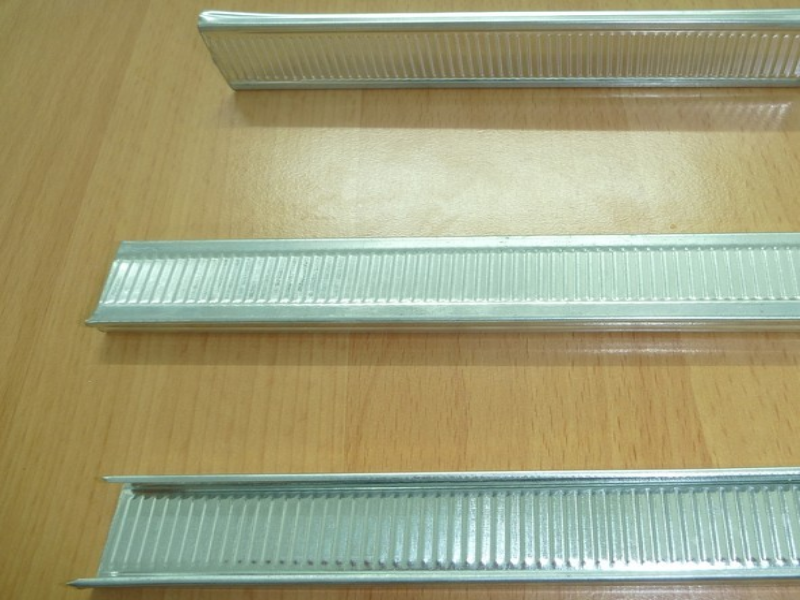
Z-shaped galvanized light steel keel is a metal profile commonly used in building decoration and structure. It is named after its cross-sectional shape resembling the letter "Z" and has good strength, stability, and anti-corrosion performance. So where is it mainly used? The following are common application scenarios:
The main uses of Z-shaped galvanized light steel keel are:
1. Roof system (roof support)
In steel structure buildings, Z-shaped keels are commonly used for roof purlins to support roof panels and transfer loads.
Can be used in conjunction with C-shaped steel to adapt to different structural spans and load requirements.
2. Wall system
Used as wall cross braces or wall purlins, especially in the exterior walls of light steel structure factories or warehouses.
Supporting wall panels to enhance structural stability.
3. Ceiling system
The main or auxiliary keel used for the ceiling of large spaces such as shopping malls, exhibition halls, and airports.
Capable of bearing large ceiling loads, used in conjunction with decorative materials such as gypsum board and aluminum buckle board.
4. Curtain Wall Skeleton System
Can be used as a secondary structure for curtain walls, serving to connect and support decorative surfaces such as glass or aluminum panels.
5. Solar bracket
In projects such as photovoltaic power stations, it is commonly used as a support structure for solar photovoltaic panels, especially in rooftop distributed photovoltaics.
6. Cold storage and purification workshop partition walls and ceilings
Because galvanizing has strong anti-corrosion properties, it is suitable for places with high environmental requirements.
Summary of Advantages:
Rust and corrosion resistance (protected by galvanized layer)
Easy installation (can be quickly assembled with connectors)
High strength, lightweight structure (suitable for areas with large spans)
Lower cost (more economical compared to hot-rolled steel)
The main uses of Z-shaped galvanized light steel keel are:
1. Roof system (roof support)
In steel structure buildings, Z-shaped keels are commonly used for roof purlins to support roof panels and transfer loads.
Can be used in conjunction with C-shaped steel to adapt to different structural spans and load requirements.
2. Wall system
Used as wall cross braces or wall purlins, especially in the exterior walls of light steel structure factories or warehouses.
Supporting wall panels to enhance structural stability.
3. Ceiling system
The main or auxiliary keel used for the ceiling of large spaces such as shopping malls, exhibition halls, and airports.
Capable of bearing large ceiling loads, used in conjunction with decorative materials such as gypsum board and aluminum buckle board.
4. Curtain Wall Skeleton System
Can be used as a secondary structure for curtain walls, serving to connect and support decorative surfaces such as glass or aluminum panels.
5. Solar bracket
In projects such as photovoltaic power stations, it is commonly used as a support structure for solar photovoltaic panels, especially in rooftop distributed photovoltaics.
6. Cold storage and purification workshop partition walls and ceilings
Because galvanizing has strong anti-corrosion properties, it is suitable for places with high environmental requirements.
Summary of Advantages:
Rust and corrosion resistance (protected by galvanized layer)
Easy installation (can be quickly assembled with connectors)
High strength, lightweight structure (suitable for areas with large spans)
Lower cost (more economical compared to hot-rolled steel)
Australian Standard 275g Zinc Coating Metal Channel Furring
Galvanized Steel U Channel
Related Article

Ceiling wall angle, also known as perimeter angle or L-angle, is an indispensable L-shaped metal profile for suspended drywall ceiling systems. Roll-formed from cold-rolled galvanized steel, ceiling wall angle is fixed along the wall perimeter to support the ends of main channels and furring channels,
Ceiling Wall Angle – Galvanized L-Shaped Perimeter Trim for Suspended Drywall Ceilings
Galvanized steel profiles are the foundational metal framing components widely used in modern interior construction. Roll-formed from cold-rolled steel coated with protective zinc layer, galvanized steel profiles cover a full range of shapes including C studs, U tracks, omega channels,
Galvanized Steel Profiles – Reliable Cold Rolled Framing for Drywall Walls and Ceilings

Metal furring channel for ceiling is a vital secondary framing component widely used in suspended ceiling and drywall ceiling systems. Roll-formed from cold-rolled galvanized steel, this lightweight metal profile works together with main channels, hangers and wall angles to create a level,
Metal Furring Channel for Ceiling – Galvanized Secondary Framing for Suspended Drywall Ceilings

Metal omega channel, also widely called omega furring channel or hat channel, is an indispensable secondary metal framing profile for modern suspended ceilings and drywall wall furring systems. Named after its distinctive Ω shape, this profile is roll-formed from cold-rolled galvanized steel
Metal Omega Channel – Galvanized Omega Furring Channel for Drywall Ceiling and Wall Framing