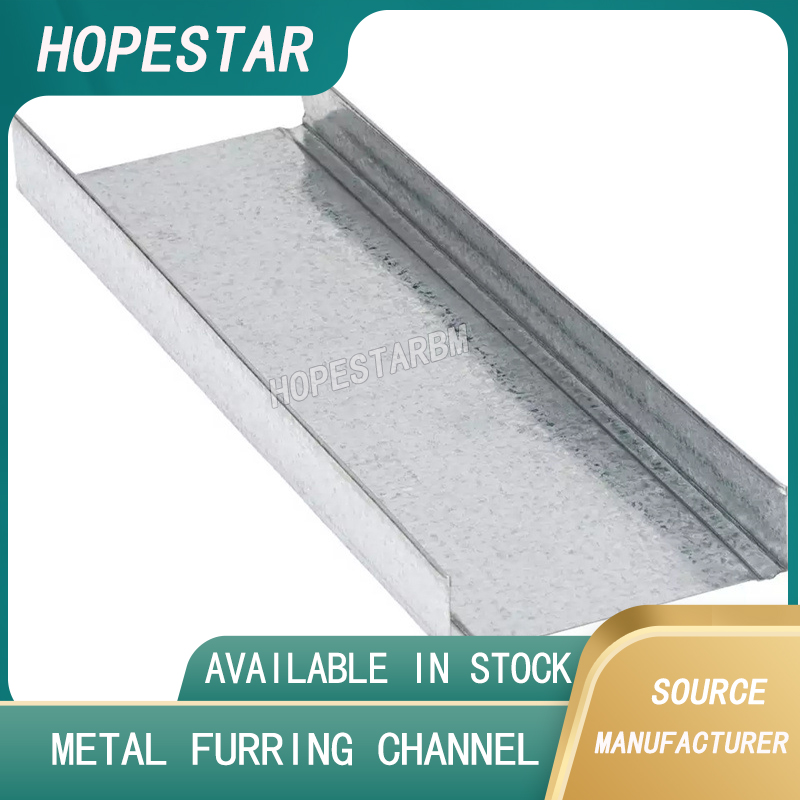
Standard Thickness of Metal Furring Channel for Drywall System
In modern construction ceiling and partition systems, the Metal Furring Channel is a key structural component for drywall installation. Its thickness directly affects load-bearing capacity, structural stability, and service life, making it an important factor in engineering selection.
1. Common Standard Thickness Range
In drywall ceiling and wall systems, the typical thickness of metal furring channels is:
- 0.4mm – 0.6mm: commonly used for light-duty ceiling systems
- 0.6mm – 0.8mm: standard for residential and commercial applications
- 0.8mm – 1.2mm: used for heavy-duty or industrial construction
Among these, 0.5mm and 0.6mm are the most widely used specifications in the market, suitable for most interior ceiling and partition systems.
2. Application Scenarios of Different Thicknesses
1) 0.4mm – 0.5mm (Light-duty applications)
Suitable for ordinary residential ceilings and small decorative ceiling systems with low load requirements. This thickness is cost-effective but not suitable for large-span structures.
2) 0.6mm – 0.8mm (Standard engineering use)
Widely used in office buildings, hotels, shopping malls, and other commercial projects. It offers a good balance between strength and cost.
3) 0.8mm and above (Reinforced structure)
Used in industrial buildings, equipment rooms, or ceiling systems requiring extra load-bearing capacity, providing higher stability and resistance to deformation.
3. Factors to Consider When Selecting Thickness
- Ceiling span size: larger spans require thicker channels
- Gypsum board weight: double-layer boards require stronger profiles
- Environmental conditions: humid or high-temperature areas require thicker galvanized channels
- Construction code requirements: different regions and projects may have specific standards
4. Relationship Between Galvanizing and Thickness
In addition to thickness, surface treatment is also very important. High-quality metal furring channels are usually produced with hot-dip galvanizing, which effectively prevents corrosion and extends service life. Under the same thickness, better galvanizing quality ensures more stable performance.
5. Conclusion
In drywall ceiling and partition systems, the standard thickness of Metal Furring Channels is generally in the range of 0.4mm to 0.8mm. Selection should be based on project requirements, load conditions, and installation environment rather than thickness alone.
Proper selection of metal furring channel thickness not only improves construction safety but also reduces long-term maintenance costs, making it a critical factor in building design and installation.
Metal Furring Channel vs Hat Channel: Differences and Applications
What Are the Advantages of Metal Furring Channel Compared to Wood Furring Strip?
Related Article