
Profile for Drywall
2026-06-26
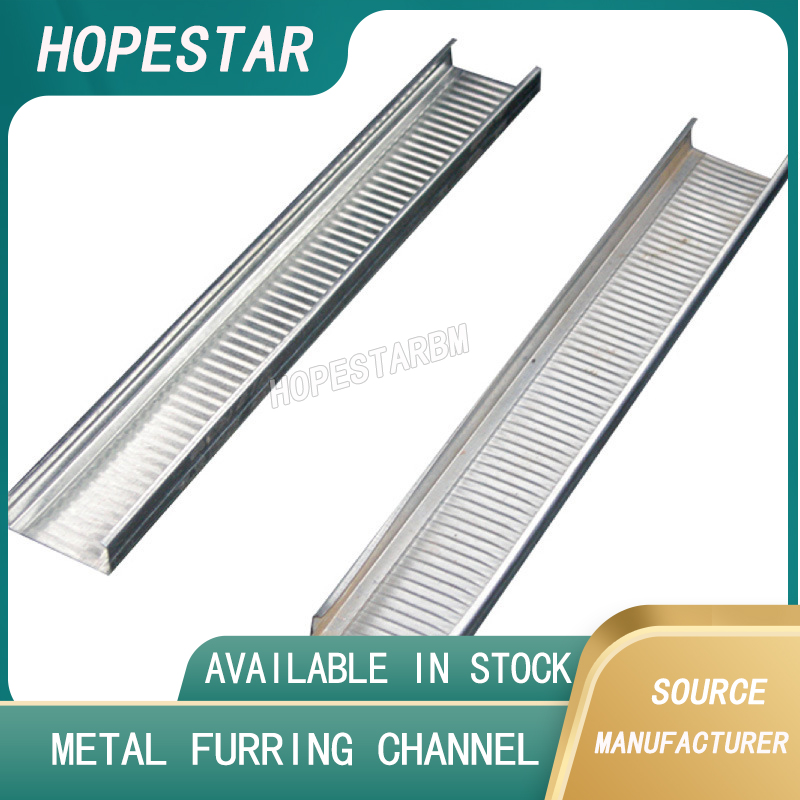
A flawless, long-lasting drywall finish never starts with the sheets themselves — it relies on a precision-engineered profile for drywall to create a rigid, perfectly aligned skeleton behind every wall and ceiling. These standardized metal framing profiles have become the industry standard for modern construction, replacing outdated wooden furring strips for unmatched consistency and performance.
Designed specifically to pair seamlessly with gypsum board panels, drywall profiles come in a full range of specialized shapes to cover every part of the framing system. C-shaped wall studs act as the vertical support for partition walls, while matching U-shaped top and bottom tracks lock the entire frame securely to floors and ceilings. For suspended ceiling systems, lightweight hat furring channels clip directly to main carrier rails, creating a perfectly flat mounting plane that eliminates uneven drywall seams. Corner bead profiles reinforce all external wall corners, preventing chipping, cracking and impact damage even in high-traffic commercial spaces.
One of the biggest advantages of using dedicated drywall profiles is their dimensional stability. Unlike natural wood that warps, shrinks or twists with seasonal humidity changes, galvanized steel drywall profiles stay perfectly straight year after year. This eliminates the common problem of popped screws and cracked joint compound that plagues wood-framed drywall jobs. Most profiles feature pre-punched service holes along their length, letting electrical wires and plumbing pipes run through the frame without messy notching or weakening the structural integrity.
These profiles also drastically speed up installation for contractors. All components follow universal sizing standards, so they cut cleanly with a metal snip, lock together with self-drilling screws, and stay perfectly plumb without constant adjustments. When paired with moisture-resistant drywall panels, stainless steel or galvanized profiles with extra zinc coating work perfectly in bathrooms, laundry rooms and basement spaces, with zero risk of rust or mold growth.
For both residential renovations and large commercial projects, investing in high-quality, code-compliant drywall profiles is the most cost-effective choice to deliver a seamless, crack-free finish that stays flat for decades. It is not just a secondary framing accessory — it is the critical foundation that turns loose drywall sheets into a smooth, durable wall that meets every professional construction standard.
Designed specifically to pair seamlessly with gypsum board panels, drywall profiles come in a full range of specialized shapes to cover every part of the framing system. C-shaped wall studs act as the vertical support for partition walls, while matching U-shaped top and bottom tracks lock the entire frame securely to floors and ceilings. For suspended ceiling systems, lightweight hat furring channels clip directly to main carrier rails, creating a perfectly flat mounting plane that eliminates uneven drywall seams. Corner bead profiles reinforce all external wall corners, preventing chipping, cracking and impact damage even in high-traffic commercial spaces.
One of the biggest advantages of using dedicated drywall profiles is their dimensional stability. Unlike natural wood that warps, shrinks or twists with seasonal humidity changes, galvanized steel drywall profiles stay perfectly straight year after year. This eliminates the common problem of popped screws and cracked joint compound that plagues wood-framed drywall jobs. Most profiles feature pre-punched service holes along their length, letting electrical wires and plumbing pipes run through the frame without messy notching or weakening the structural integrity.
These profiles also drastically speed up installation for contractors. All components follow universal sizing standards, so they cut cleanly with a metal snip, lock together with self-drilling screws, and stay perfectly plumb without constant adjustments. When paired with moisture-resistant drywall panels, stainless steel or galvanized profiles with extra zinc coating work perfectly in bathrooms, laundry rooms and basement spaces, with zero risk of rust or mold growth.
For both residential renovations and large commercial projects, investing in high-quality, code-compliant drywall profiles is the most cost-effective choice to deliver a seamless, crack-free finish that stays flat for decades. It is not just a secondary framing accessory — it is the critical foundation that turns loose drywall sheets into a smooth, durable wall that meets every professional construction standard.
Galvanized Steel Profiles
Metal Furring Channel for Ceiling
Related Article

Ceiling wall angle, also known as perimeter angle or L-angle, is an indispensable L-shaped metal profile for suspended drywall ceiling systems. Roll-formed from cold-rolled galvanized steel, ceiling wall angle is fixed along the wall perimeter to support the ends of main channels and furring channels,
Ceiling Wall Angle – Galvanized L-Shaped Perimeter Trim for Suspended Drywall Ceilings
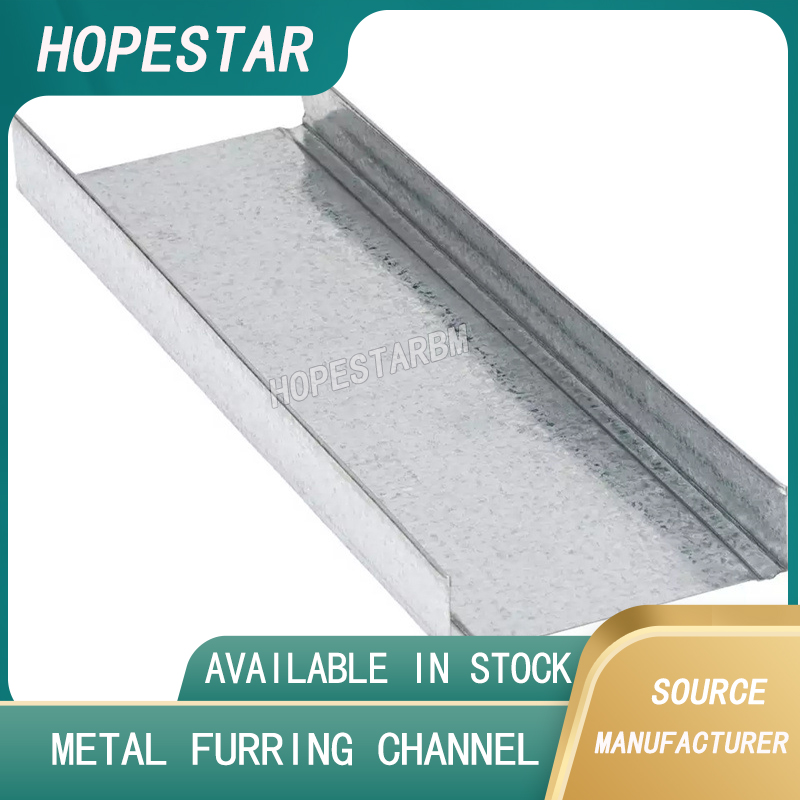
Galvanized steel profiles are the foundational metal framing components widely used in modern interior construction. Roll-formed from cold-rolled steel coated with protective zinc layer, galvanized steel profiles cover a full range of shapes including C studs, U tracks, omega channels,
Galvanized Steel Profiles – Reliable Cold Rolled Framing for Drywall Walls and Ceilings

Metal furring channel for ceiling is a vital secondary framing component widely used in suspended ceiling and drywall ceiling systems. Roll-formed from cold-rolled galvanized steel, this lightweight metal profile works together with main channels, hangers and wall angles to create a level,
Metal Furring Channel for Ceiling – Galvanized Secondary Framing for Suspended Drywall Ceilings

Metal omega channel, also widely called omega furring channel or hat channel, is an indispensable secondary metal framing profile for modern suspended ceilings and drywall wall furring systems. Named after its distinctive Ω shape, this profile is roll-formed from cold-rolled galvanized steel
Metal Omega Channel – Galvanized Omega Furring Channel for Drywall Ceiling and Wall Framing