
Metal Roof Deck Profiles.Deformation process of metal materials Surface work hardening
2022-10-02
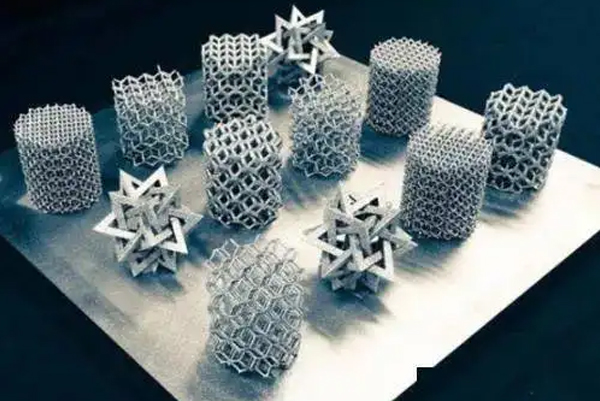
Metal Roof Deck Profiles.Deformation process of metal materials Surface work hardening -- When cutting plastic metal materials, the hardness of the workpiece surface layer is significantly increased while the plasticity is decreased.
1、 Deformation related concepts
1. External force applied to metal materials during processing and use.
According to different load action properties:
(1) Static load: load with constant size or slow change process.
(2) Impact load: the load that acts on the part at a high speed in a short time.
(3) Alternating load: load whose size, direction or size and direction change periodically with time.
2. Internal force: When the workpiece or material is subjected to external load, in order to keep it from deformation, a force generated inside the material that is relatively resistant to external force is called.
3. Stress: It is assumed that the internal force acting on the cross section of the part is evenly distributed, and the internal force on the unit cross section area.
2、 Deformation process of metal materials
3、 Cold plastic deformation and work hardening of metal materials
Deformation strengthening (work hardening) - In addition to changing the shape of the grain, cold plastic deformation will also increase the dislocation density inside the grain and the lattice distortion, so that the strength and hardness of the metal will increase with the increase of deformation, while the plasticity and toughness will decrease.
The shape of grains will change when the shape of metal changes due to plastic deformation. Generally, grains will be compressed or elongated along the deformation direction.
Metal structure after plastic deformation
4、 Technological properties of metal materials
Process performance of metal materials - the adaptability of metal materials to different processing methods. It includes casting performance, forging performance, cutting processing performance, welding performance, heat treatment performance, etc.
Casting performance -- the ability to obtain accurate shape and sound internal castings in the casting process mainly depends on the fluidity, shrinkage and segregation tendency of the metal.
Forging performance -- the degree of difficulty in obtaining good forgings by forging and forming. Plasticity and deformation resistance are commonly used to measure comprehensively.
Welding performance -- the adaptability of metal materials to welding processing, that is, the difficulty of obtaining high-quality welding joints under certain welding process conditions. For carbon steel and low alloy steel, the welding performance is mainly related to its chemical composition (of which carbon has the greatest influence).
Machinability -- the degree of difficulty in cutting metal materials. Generally, it is measured by cutting speed, cutting resistance, chip breaking capacity, tool durability and surface roughness after machining.
1、 Deformation related concepts
1. External force applied to metal materials during processing and use.
According to different load action properties:
(1) Static load: load with constant size or slow change process.
(2) Impact load: the load that acts on the part at a high speed in a short time.
(3) Alternating load: load whose size, direction or size and direction change periodically with time.
2. Internal force: When the workpiece or material is subjected to external load, in order to keep it from deformation, a force generated inside the material that is relatively resistant to external force is called.
3. Stress: It is assumed that the internal force acting on the cross section of the part is evenly distributed, and the internal force on the unit cross section area.
2、 Deformation process of metal materials
3、 Cold plastic deformation and work hardening of metal materials
Deformation strengthening (work hardening) - In addition to changing the shape of the grain, cold plastic deformation will also increase the dislocation density inside the grain and the lattice distortion, so that the strength and hardness of the metal will increase with the increase of deformation, while the plasticity and toughness will decrease.
The shape of grains will change when the shape of metal changes due to plastic deformation. Generally, grains will be compressed or elongated along the deformation direction.
Metal structure after plastic deformation
4、 Technological properties of metal materials
Process performance of metal materials - the adaptability of metal materials to different processing methods. It includes casting performance, forging performance, cutting processing performance, welding performance, heat treatment performance, etc.
Casting performance -- the ability to obtain accurate shape and sound internal castings in the casting process mainly depends on the fluidity, shrinkage and segregation tendency of the metal.
Forging performance -- the degree of difficulty in obtaining good forgings by forging and forming. Plasticity and deformation resistance are commonly used to measure comprehensively.
Welding performance -- the adaptability of metal materials to welding processing, that is, the difficulty of obtaining high-quality welding joints under certain welding process conditions. For carbon steel and low alloy steel, the welding performance is mainly related to its chemical composition (of which carbon has the greatest influence).
Machinability -- the degree of difficulty in cutting metal materials. Generally, it is measured by cutting speed, cutting resistance, chip breaking capacity, tool durability and surface roughness after machining.
Metallic Cat Stud Fee.Do you like these metal materials?
Furring Channels.15 kinds of metal materials
Related Article

Ceiling wall angle, also known as perimeter angle or L-angle, is an indispensable L-shaped metal profile for suspended drywall ceiling systems. Roll-formed from cold-rolled galvanized steel, ceiling wall angle is fixed along the wall perimeter to support the ends of main channels and furring channels,
Ceiling Wall Angle – Galvanized L-Shaped Perimeter Trim for Suspended Drywall Ceilings
Galvanized steel profiles are the foundational metal framing components widely used in modern interior construction. Roll-formed from cold-rolled steel coated with protective zinc layer, galvanized steel profiles cover a full range of shapes including C studs, U tracks, omega channels,
Galvanized Steel Profiles – Reliable Cold Rolled Framing for Drywall Walls and Ceilings

Metal furring channel for ceiling is a vital secondary framing component widely used in suspended ceiling and drywall ceiling systems. Roll-formed from cold-rolled galvanized steel, this lightweight metal profile works together with main channels, hangers and wall angles to create a level,
Metal Furring Channel for Ceiling – Galvanized Secondary Framing for Suspended Drywall Ceilings

Metal omega channel, also widely called omega furring channel or hat channel, is an indispensable secondary metal framing profile for modern suspended ceilings and drywall wall furring systems. Named after its distinctive Ω shape, this profile is roll-formed from cold-rolled galvanized steel
Metal Omega Channel – Galvanized Omega Furring Channel for Drywall Ceiling and Wall Framing