
metal hat channel sizes
2024-08-15
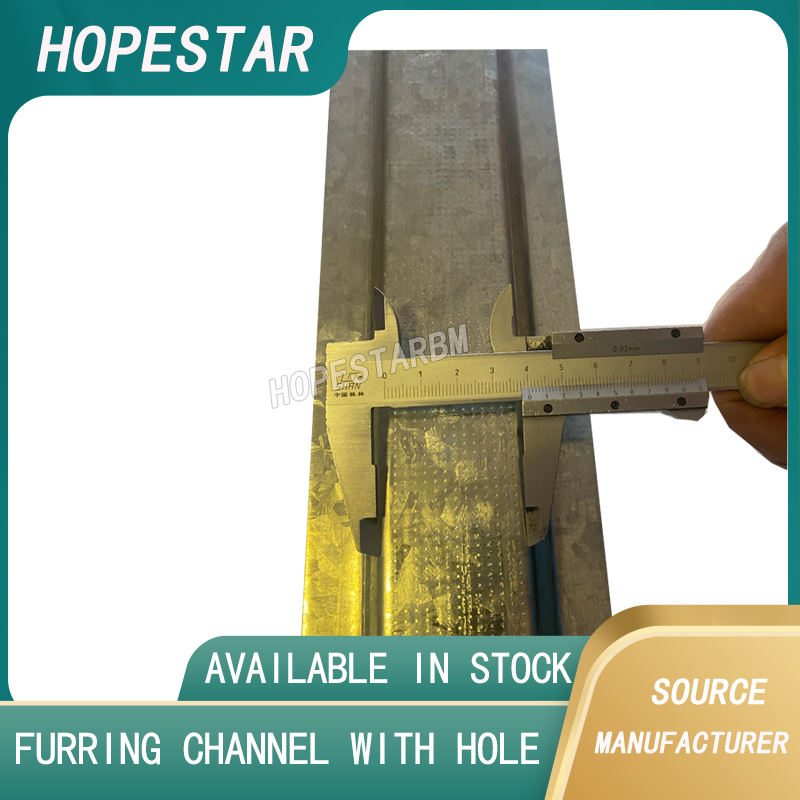
Metal hat channels, often used in construction for supporting wall systems and ceilings, come in various sizes. The specific dimensions can vary based on the manufacturer, but here are some common sizes for hat channels:
1. Depth (Height of the Hat Channel):
7/8 inch: This is the most common size, typically used for drywall applications.
1-1/2 inches: Often used in situations requiring more strength or for furring walls.
2. Width (Base of the Hat Channel):
1-1/4 inches: This is the standard width for many hat channels.
1-1/2 inches: Sometimes used for applications needing a broader base.
3. Length:
Standard lengths are 10 feet and 12 feet, but they can be cut to custom lengths as needed.
4. Material Thickness (Gauge):
Common gauges are 25 gauge, 20 gauge, and 18 gauge. The gauge indicates the thickness of the metal, with a lower gauge number representing a thicker and stronger material.
These dimensions are typical, but they may vary slightly depending on the specific application or manufacturer.
7/8 inch: This is the most common size, typically used for drywall applications.
1-1/2 inches: Often used in situations requiring more strength or for furring walls.
2. Width (Base of the Hat Channel):
1-1/4 inches: This is the standard width for many hat channels.
1-1/2 inches: Sometimes used for applications needing a broader base.
3. Length:
Standard lengths are 10 feet and 12 feet, but they can be cut to custom lengths as needed.
4. Material Thickness (Gauge):
Common gauges are 25 gauge, 20 gauge, and 18 gauge. The gauge indicates the thickness of the metal, with a lower gauge number representing a thicker and stronger material.
These dimensions are typical, but they may vary slightly depending on the specific application or manufacturer.
What is an aluminum hat channel used for?
metal furring wall detail
Related Article

Ceiling wall angle, also known as perimeter angle or L-angle, is an indispensable L-shaped metal profile for suspended drywall ceiling systems. Roll-formed from cold-rolled galvanized steel, ceiling wall angle is fixed along the wall perimeter to support the ends of main channels and furring channels,
Ceiling Wall Angle – Galvanized L-Shaped Perimeter Trim for Suspended Drywall Ceilings
Galvanized steel profiles are the foundational metal framing components widely used in modern interior construction. Roll-formed from cold-rolled steel coated with protective zinc layer, galvanized steel profiles cover a full range of shapes including C studs, U tracks, omega channels,
Galvanized Steel Profiles – Reliable Cold Rolled Framing for Drywall Walls and Ceilings

Metal furring channel for ceiling is a vital secondary framing component widely used in suspended ceiling and drywall ceiling systems. Roll-formed from cold-rolled galvanized steel, this lightweight metal profile works together with main channels, hangers and wall angles to create a level,
Metal Furring Channel for Ceiling – Galvanized Secondary Framing for Suspended Drywall Ceilings

Metal omega channel, also widely called omega furring channel or hat channel, is an indispensable secondary metal framing profile for modern suspended ceilings and drywall wall furring systems. Named after its distinctive Ω shape, this profile is roll-formed from cold-rolled galvanized steel
Metal Omega Channel – Galvanized Omega Furring Channel for Drywall Ceiling and Wall Framing