Galvanized Steel Nogging Track for Drywall
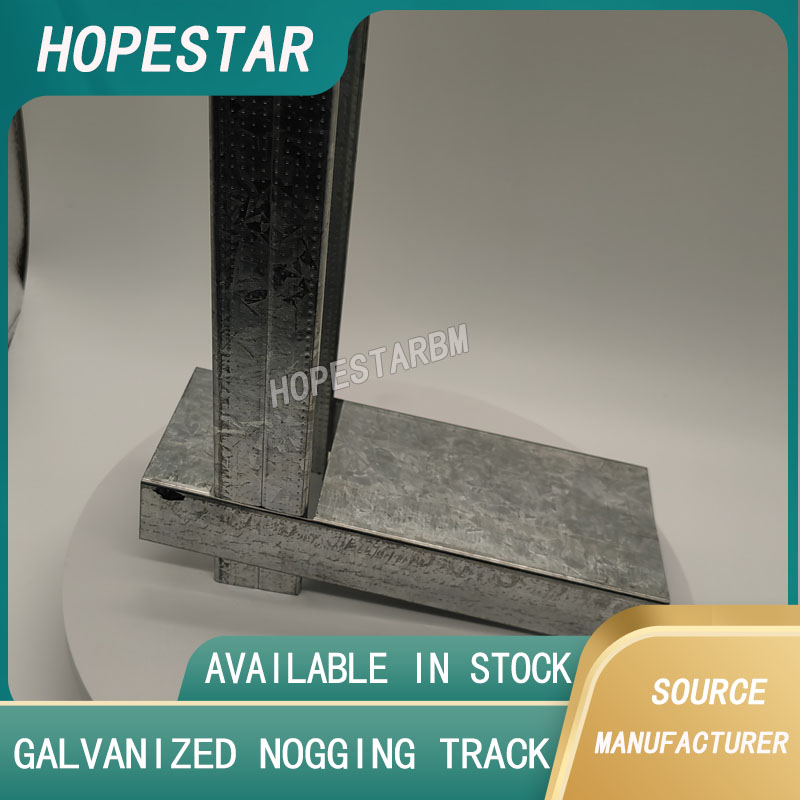
When constructing interior partition walls, especially in commercial or residential drywall systems, stability and durability are crucial. One often overlooked yet essential component in metal stud framing is the galvanized steel nogging track. Acting as a horizontal bracing between vertical studs, the nogging track significantly enhances the structural strength and integrity of the wall.
What Is a Nogging Track?
A nogging track, also known as a horizontal bracing track or nogging channel, is a strip of steel used between vertical studs in drywall systems. It is typically installed at mid-height of the wall to prevent the studs from bowing, twisting, or moving out of alignment. In drywall systems that exceed standard height or require higher load-bearing capacity (such as for attaching heavy equipment or fixtures), the nogging track provides essential lateral support.
Why Galvanized Steel?
The nogging track is made from hot-dip galvanized steel, which provides superior resistance against rust and corrosion. This is especially important in regions with high humidity or frequent temperature changes. Galvanized steel also ensures long-term performance and reduces the need for future maintenance.
Features and Benefits
-
Corrosion Resistance: Zinc coating (usually 60–275g/m²) protects the surface from rust, extending product lifespan.
-
High Strength, Lightweight: Provides stability without adding excessive weight, making it easy to transport and install.
-
Customizable Size and Punching: Tracks can be produced in various widths, thicknesses, and lengths, and can include holes for cable or pipe routing.
-
Fire and Sound-Rated Systems: In certified wall systems, nogging tracks help maintain consistent spacing and support between studs, which is crucial for fire resistance and sound insulation.
Application Areas
Galvanized steel nogging tracks are widely used in:
-
Office partitions
-
Commercial and industrial drywall systems
-
Prefabricated buildings
-
Modular construction projects
-
Public facilities like hospitals, schools, and shopping malls
Installation Tips
The nogging track is usually installed after placing the vertical studs. It is fastened horizontally between the studs, typically at a height of 1,200mm (or as required by design). In some cases, multiple rows may be used depending on wall height. Proper alignment and fastening are key to ensuring that the wall remains rigid and structurally sound.
Conclusion
The galvanized steel nogging track for drywall may seem like a simple component, but it plays a critical role in creating safe, stable, and long-lasting partition wall systems. For contractors, builders, and developers focused on quality and performance, using high-quality nogging tracks is a smart investment in the overall success of the project.
Light Steel Frame Nogging Track
What is a nogging track used for?
Related Article