Galvanized Steel Drywall Corner Bead
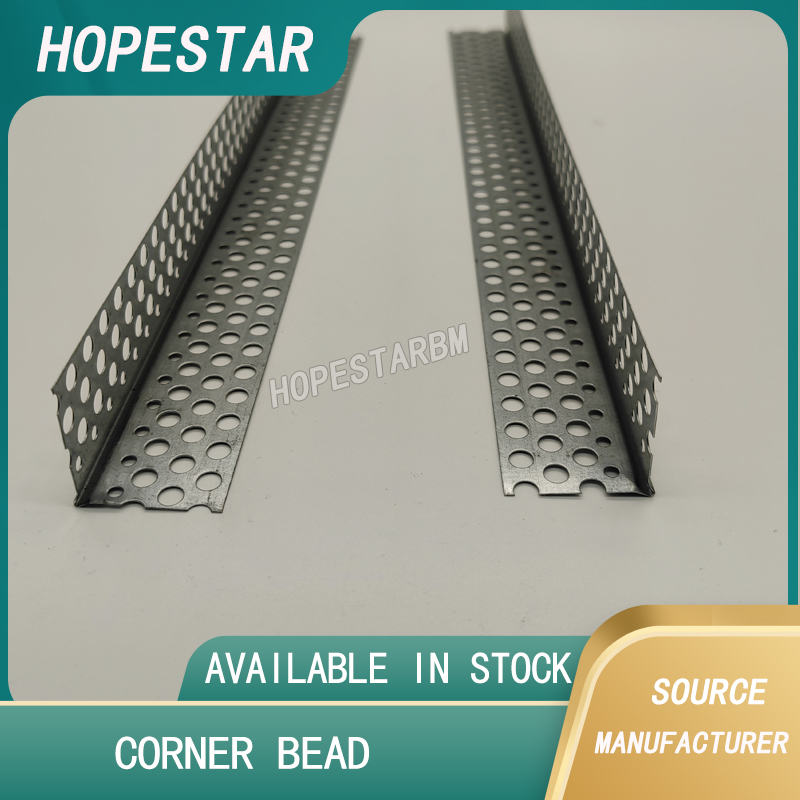
Galvanized Steel Drywall Corner Bead is an essential component in modern drywall construction, designed to reinforce and protect the corners of interior walls. Made from galvanized steel, this corner bead is highly resistant to corrosion, making it suitable for long-term use in residential, commercial, and institutional buildings.
Its primary function is to provide a clean, straight, and durable finish to wall corners, preventing damage caused by everyday wear and tear, such as bumps, scrapes, and impacts. During installation, the corner bead is applied to the external corner of drywall panels and secured with nails, screws, or adhesive. Once fixed in place, it is covered with joint compound, sanded, and painted, blending seamlessly with the wall surface.
The perforated or grooved design of galvanized corner beads enhances their grip on the drywall compound, ensuring a firm and long-lasting bond. The galvanized coating not only protects the steel from rust but also strengthens the structure, offering better impact resistance compared to plastic or paper-faced alternatives. Typically, galvanized steel corner beads come in standard lengths of 8 feet (2.5 meters) or 10 feet (3 meters), with leg widths commonly around 1 inch (25 mm) on each side. Thickness may vary depending on application requirements, usually ranging from 0.3 mm to 0.5 mm.
This product is widely used in high-traffic areas such as hallways, stairwells, schools, offices, and hospitals, where wall corners are more likely to be bumped or damaged. It provides not only structural support but also contributes to the overall aesthetics of the interior by ensuring perfectly aligned and crack-free edges. With the growing demand for quality finishes in construction, galvanized steel drywall corner beads have become a popular and trusted solution.
Their ease of installation, affordability, and reliability make them a go-to choice for contractors and builders seeking durability and precision in drywall finishing.
Is metal corner bead better than plastic?
The difference between Australian light steel keel and South American light steel keel
Related Article