
furring channel thickness.Philips MR interface and parameters
2022-09-29
furring channel thickness.Philips MR interface and parameters. Stacks (stacking blocks): several groups can be displayed. If there are multiple groups, Stack can be encoded with A, B, C, etc., and each Stacks can be set separately. Eg. Lumbar disc scanning uses multiple stacks, each layer of intervertebral disc corresponds to a stack, each stack can be set, there is no need for all stack to be consistent.
Type (stacked block type): there are parallel (parallel) and radial (radial). It should be noted that in the case of parallel, there is no limit to the angle of the layer, but when the inclination of the layer is greater than 45 °, the orientation of the stack and the orientation of the image will be adjusted automatically. Eg. The shoulder joint was scanned in a coronal position with an angle greater than 45 °, and vector scanning was performed as a result.
Radial mode.
Radial mode produces cross artifacts: dark bands appear in the image because multiple layers cross each other in a radial scan. This is due to the fact that the spin in the crossing region reaches saturation. To avoid this, position the central axis properly so that the dark zone does not coincide with the anatomical site of interest. Cross artifacts are more obvious in SE sequences than in FFE sequences.
Slices (number of layers): same as the slice setting in summary.
Slice gap (layer spacing): unit [mm]; the default value is 10% of the layer thickness. You can set its size and range [- 6mm--320mm] as you customize. It is recommended not to exceed 30% of the layer thickness.
Slice orientation (layer direction): there are three directions of the sagittal coronal axis, and the three possible anatomical planes are perpendicular to each other. When the positioning angle exceeds 45 degrees, the azimuth changes automatically.
Fold-over direction (folding direction): that is, the phase coding direction. If you need to change the phase coding direction, you can adjust it under this parameter.
Fat shift direction (fat shift direction): generally, it is the direction of frequency coding. At any time, you can only choose two directions (An or P, R or L, F or H).
MR microscopic examination with extreme WFS (Water Lipid Chemical shift): controlling the direction of fat shift means controlling the excessive projection of water and fat. In the brain DWI, the direction of fat shift should be-P (backward) to avoid high signal-A (forward) at the frontal sinus boundary and to avoid high signal at the temporal bone boundary.
Minimum number of packages (minimum number of packets): the collection of a scan stack can be divided into several groups (or packets), and the specific package data is displayed in the information bar on the right. Eg. In the FLAIR sequence, usually divided into 3-4 packets can effectively reduce the flow sensitivity.
When the number of layers collected by TR is too short or the SAR exceeds 4W/KG, the system will automatically divide into more packets for collection. At this time, reducing the minimum number of packets can not reduce the number of collected packets.
Slice scan order (layer scanning order): take 10 layers as an example. Default: single packet scanning is odd first and then even. 1 ascending-FH:1,2,3,4,5,6,7,8,9,10 descending-HF:10,9,8,7,6,5,4,3,2,1 rev.central:1,10,2,9,3,8,4,7,5,6 interleaved:1,4,7,10,2,5,8,3,6,9 3, 5, 7, 9, 10, 10, 10.
PlanAlign (consistent plan): prevent rotation within the plane.
REST slabs (saturated zone): up to 6 saturated bands can be set, which is unique to circular saturated zones in MRS. It can be set to 2-16 (step by step).
Suppress artifacts caused by flow, swallowing, wall movement and intestinal peristalsis.
Selective flow inhibition in MRA.
Minimize surround artifacts along the phase coding axis.
Type (saturated zone type): contains three types: parallel, vertical and free setting.
Thickness (thickness of saturated zone): 5-80mm, generally using 60mm.
Position (position): can be set to head, foot, front, back, left, right.
Power (energy): 3T is divided into four levels, the higher the series, the better the saturation effect.
Type (stacked block type): there are parallel (parallel) and radial (radial). It should be noted that in the case of parallel, there is no limit to the angle of the layer, but when the inclination of the layer is greater than 45 °, the orientation of the stack and the orientation of the image will be adjusted automatically. Eg. The shoulder joint was scanned in a coronal position with an angle greater than 45 °, and vector scanning was performed as a result.
Radial mode.
Radial mode produces cross artifacts: dark bands appear in the image because multiple layers cross each other in a radial scan. This is due to the fact that the spin in the crossing region reaches saturation. To avoid this, position the central axis properly so that the dark zone does not coincide with the anatomical site of interest. Cross artifacts are more obvious in SE sequences than in FFE sequences.
Slices (number of layers): same as the slice setting in summary.
Slice gap (layer spacing): unit [mm]; the default value is 10% of the layer thickness. You can set its size and range [- 6mm--320mm] as you customize. It is recommended not to exceed 30% of the layer thickness.
Slice orientation (layer direction): there are three directions of the sagittal coronal axis, and the three possible anatomical planes are perpendicular to each other. When the positioning angle exceeds 45 degrees, the azimuth changes automatically.
Fold-over direction (folding direction): that is, the phase coding direction. If you need to change the phase coding direction, you can adjust it under this parameter.
Fat shift direction (fat shift direction): generally, it is the direction of frequency coding. At any time, you can only choose two directions (An or P, R or L, F or H).
MR microscopic examination with extreme WFS (Water Lipid Chemical shift): controlling the direction of fat shift means controlling the excessive projection of water and fat. In the brain DWI, the direction of fat shift should be-P (backward) to avoid high signal-A (forward) at the frontal sinus boundary and to avoid high signal at the temporal bone boundary.
Minimum number of packages (minimum number of packets): the collection of a scan stack can be divided into several groups (or packets), and the specific package data is displayed in the information bar on the right. Eg. In the FLAIR sequence, usually divided into 3-4 packets can effectively reduce the flow sensitivity.
When the number of layers collected by TR is too short or the SAR exceeds 4W/KG, the system will automatically divide into more packets for collection. At this time, reducing the minimum number of packets can not reduce the number of collected packets.
Slice scan order (layer scanning order): take 10 layers as an example. Default: single packet scanning is odd first and then even. 1 ascending-FH:1,2,3,4,5,6,7,8,9,10 descending-HF:10,9,8,7,6,5,4,3,2,1 rev.central:1,10,2,9,3,8,4,7,5,6 interleaved:1,4,7,10,2,5,8,3,6,9 3, 5, 7, 9, 10, 10, 10.
PlanAlign (consistent plan): prevent rotation within the plane.
REST slabs (saturated zone): up to 6 saturated bands can be set, which is unique to circular saturated zones in MRS. It can be set to 2-16 (step by step).
Suppress artifacts caused by flow, swallowing, wall movement and intestinal peristalsis.
Selective flow inhibition in MRA.
Minimize surround artifacts along the phase coding axis.
Type (saturated zone type): contains three types: parallel, vertical and free setting.
Thickness (thickness of saturated zone): 5-80mm, generally using 60mm.
Position (position): can be set to head, foot, front, back, left, right.
Power (energy): 3T is divided into four levels, the higher the series, the better the saturation effect.
What Is Furring Channel Used For.Leather processing chemicals
led tv ceiling design.TCL Q10G Mini LED TV Evaluation
Related Article

Ceiling wall angle, also known as perimeter angle or L-angle, is an indispensable L-shaped metal profile for suspended drywall ceiling systems. Roll-formed from cold-rolled galvanized steel, ceiling wall angle is fixed along the wall perimeter to support the ends of main channels and furring channels,
Ceiling Wall Angle – Galvanized L-Shaped Perimeter Trim for Suspended Drywall Ceilings
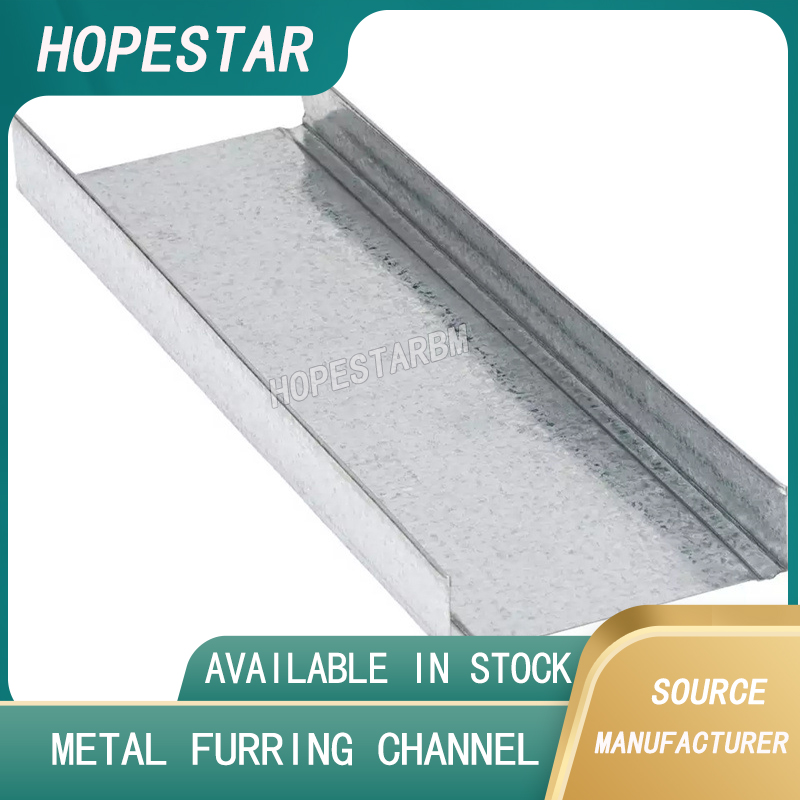
Galvanized steel profiles are the foundational metal framing components widely used in modern interior construction. Roll-formed from cold-rolled steel coated with protective zinc layer, galvanized steel profiles cover a full range of shapes including C studs, U tracks, omega channels,
Galvanized Steel Profiles – Reliable Cold Rolled Framing for Drywall Walls and Ceilings

Metal furring channel for ceiling is a vital secondary framing component widely used in suspended ceiling and drywall ceiling systems. Roll-formed from cold-rolled galvanized steel, this lightweight metal profile works together with main channels, hangers and wall angles to create a level,
Metal Furring Channel for Ceiling – Galvanized Secondary Framing for Suspended Drywall Ceilings

Metal omega channel, also widely called omega furring channel or hat channel, is an indispensable secondary metal framing profile for modern suspended ceilings and drywall wall furring systems. Named after its distinctive Ω shape, this profile is roll-formed from cold-rolled galvanized steel
Metal Omega Channel – Galvanized Omega Furring Channel for Drywall Ceiling and Wall Framing