
Furring Channel Dimensions: Standards, Classification and Engineering Applications
2026-09-07
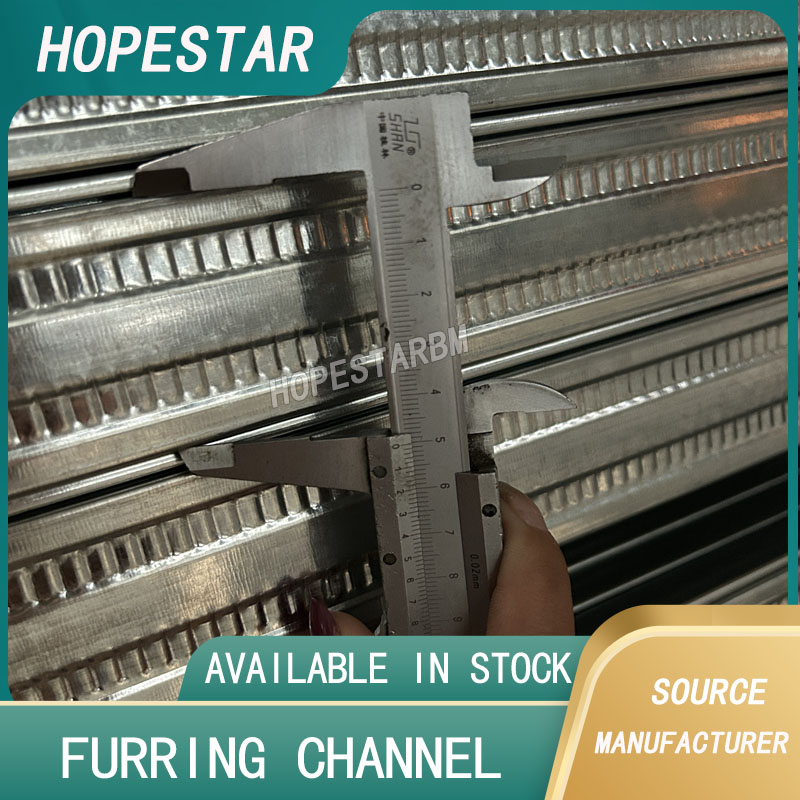
Furring channels, also known as light steel furring keels, are essential lightweight galvanized steel components widely used in modern construction for suspended ceilings, partition walls, and wall lining systems. Their dimensional specifications directly determine the structural stability, load-bearing capacity, and construction compatibility of interior decoration projects. Reasonable selection of furring channel dimensions is the core premise to ensure construction quality, avoid structural deformation, and extend the service life of building interior systems.
Furring channels are mainly C-shaped cold-rolled galvanized steel profiles, and their key dimensional parameters include section depth, flange width, steel thickness, and standard length. These four indicators constitute the complete size specification system of furring channels and comply with international construction codes and industry production standards. The standard length of conventional furring channels is uniformly 3 meters or 3.6 meters, which adapts to the conventional storey height and ceiling span of civil and commercial buildings, effectively reducing on-site cutting waste and improving construction efficiency.
Section depth and flange width are the most intuitive dimensional indicators that distinguish furring channel models. The most mainstream standard specification in the global construction market is 38mm in flange width and 12mm to 16mm in section depth, which is widely applicable to residential ceiling and light partition projects. For large commercial spaces such as shopping malls, office buildings and exhibition halls, 50mm, 60mm and other widened specifications are commonly adopted, with the section depth increased to 20mm to 27mm. Larger section sizes enhance the overall rigidity of the keel system, effectively resisting the weight of gypsum boards, thermal insulation materials and decorative finishes, and preventing ceiling sagging and cracking.
Steel plate thickness (gauge) is a critical dimensional parameter affecting the load-bearing performance of furring channels, with a common thickness range of 0.4mm to 1.2mm. In industry standards, 25-gauge (about 0.4mm to 0.6mm) lightweight furring channels are suitable for light-load residential interior decoration with low load-bearing requirements. The 20-gauge (0.8mm to 1.0mm) medium-thick specifications are the most versatile, applicable to most office and commercial building ceiling systems. For high-load scenarios such as large-span suspended ceilings and fireproof partition walls, 18-gauge and above thickened furring channels are required to ensure structural safety and stability.
In actual engineering construction, the matching of furring channel dimensions and installation spacing is equally important. Standard construction specifications require that the spacing of conventional furring channels is 16 inches on center for common gypsum board paving. When using thickened fireproof gypsum boards, the spacing can be appropriately expanded to 24 inches, but it must strictly comply with local building codes and manufacturer’s technical requirements. In addition, the edge hemming size of furring channels also affects construction quality. Standard hemmed edge designs can avoid steel burrs, improve the firmness of screw connection, and enhance the overall anti-deformation ability of the keel structure.
Different application scenarios have strict dimensional selection criteria. Wall furring channels focus on moderate depth to form a stable air insulation layer between the wall base and the decorative surface, realizing moisture-proof and heat insulation effects. Ceiling furring channels prioritize overall rigidity and uniform force bearing, so medium and large section sizes are mostly selected. Special environments such as humid workshops and outdoor canopy decorations need to match thickened galvanized furring channels with standardized dimensions to cope with complex environmental erosion.
In conclusion, furring channel dimensions are a systematic technical system covering length, section size and plate thickness. Standardized dimensional selection and standardized installation matching are key to guaranteeing the quality and durability of building interior decoration. Construction personnel must select reasonable furring channel specifications according to project type, load-bearing requirements and environmental conditions, so as to give full play to the structural advantages of lightweight steel keels and ensure the safety and stability of building interior systems.
Paper Faced Metal Corner Bead
Furring Channel Sizes
Related Article

Ceiling wall angle, also known as perimeter angle or L-angle, is an indispensable L-shaped metal profile for suspended drywall ceiling systems. Roll-formed from cold-rolled galvanized steel, ceiling wall angle is fixed along the wall perimeter to support the ends of main channels and furring channels,
Ceiling Wall Angle – Galvanized L-Shaped Perimeter Trim for Suspended Drywall Ceilings

Galvanized steel profiles are the foundational metal framing components widely used in modern interior construction. Roll-formed from cold-rolled steel coated with protective zinc layer, galvanized steel profiles cover a full range of shapes including C studs, U tracks, omega channels,
Galvanized Steel Profiles – Reliable Cold Rolled Framing for Drywall Walls and Ceilings

Metal furring channel for ceiling is a vital secondary framing component widely used in suspended ceiling and drywall ceiling systems. Roll-formed from cold-rolled galvanized steel, this lightweight metal profile works together with main channels, hangers and wall angles to create a level,
Metal Furring Channel for Ceiling – Galvanized Secondary Framing for Suspended Drywall Ceilings

Metal omega channel, also widely called omega furring channel or hat channel, is an indispensable secondary metal framing profile for modern suspended ceilings and drywall wall furring systems. Named after its distinctive Ω shape, this profile is roll-formed from cold-rolled galvanized steel
Metal Omega Channel – Galvanized Omega Furring Channel for Drywall Ceiling and Wall Framing