
Furring Channel Sizes
2026-09-04

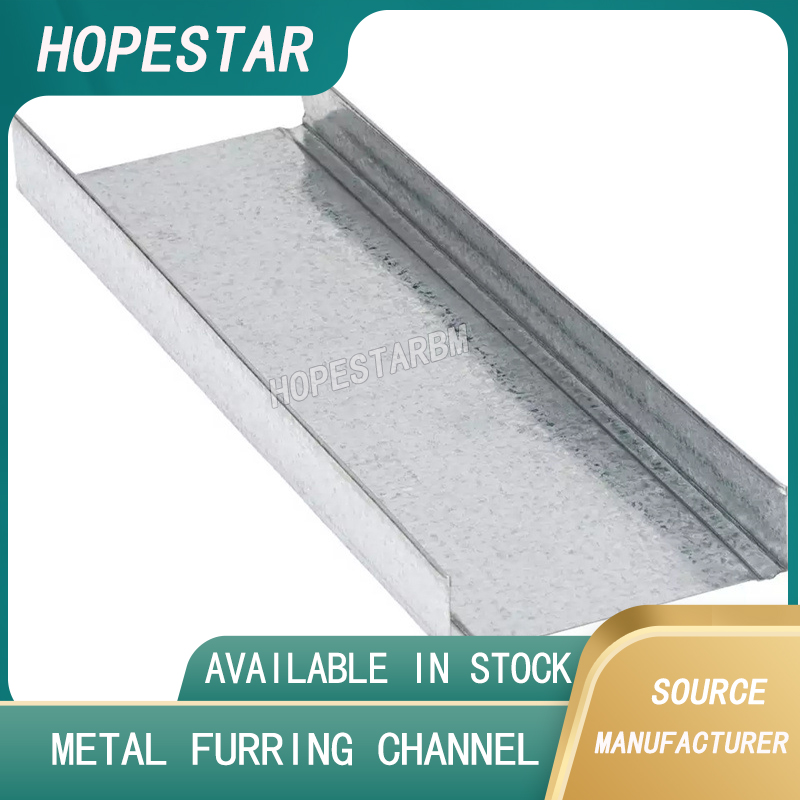
Understanding standard furring channel sizes is essential for precise, compliant, and cost-effective wall and ceiling construction. Furring channels are lightweight galvanized steel framing profiles designed to level uneven substrates, support drywall panels, and create functional cavities for insulation, wiring, and ventilation. With multiple standardized dimensions, gauges, and profile types including hat, Z, and C channels, choosing the correct size directly impacts wall flatness, structural stability, installation efficiency, and long-term project durability. This guide covers universal standard furring channel sizes, key dimension parameters, and professional selection rules for all residential and commercial construction projects.
Furring channel sizes are defined by three core measurable parameters: profile depth, base width, and steel gauge (thickness). These three indicators determine load-bearing capacity, deformation resistance, and applicable scenarios. Global construction markets adopt dual metric and imperial standards to meet regional building codes. Standard factory length is universally 3000mm (10 feet), allowing flexible on-site cutting to match custom wall and ceiling heights without material waste, which greatly improves construction flexibility for both small renovations and large-scale projects.
Metric furring channel sizes dominate Asian, European, and Oceanian construction markets with stable and unified specifications. The most widely used light-duty specification is 38×12mm, commonly produced in 0.8mm and 1.0mm steel thickness. It fits low partition walls, decorative cladding, and lightweight ceiling systems with low load demands. The 50×19mm series is the most versatile standard size, available in 0.4mm to 0.8mm thickness options. Compatible with 12.5mm and 15mm standard gypsum boards, it suits most residential interior walls, office partitions, and mall decorative walls, balancing stability and cost performance perfectly. For high walls and large-area ceilings, the heavy-duty 70×40mm size with 0.5mm to 0.6mm thickness provides enhanced rigidity and anti-sagging performance.
Imperial furring channel sizes are the mainstream standard for North American construction. The two most common specifications are 7/8-inch and 1-1/2-inch depth profiles. The 7/8-inch furring channel matches 20 to 25-gauge steel, ideal for standard residential interior walls and light-load ceiling installations. The 1-1/2-inch depth model adopts 16 to 20-gauge thickened steel, delivering stronger load capacity for commercial building walls, high partitions, exterior rainscreen systems, and large-span ceiling structures. These inch-based sizes fully adapt to local standard drywall dimensions and building installation spacing norms.
Steel gauge is a critical size parameter that determines structural performance. Light 22–25-gauge channels are lightweight and cost-effective for low-height indoor projects. Medium 18–20-gauge channels are the universal choice for most conventional walls and ceilings. Heavy 14–16-gauge thickened channels are reserved for high walls, humid environments, and projects with heavy decorative panel loads to prevent deformation and cracking.
Correct size selection must match project requirements. Short walls below 2.5 meters adopt 38×12mm light series sizes. Conventional 2.5–3.5-meter interior walls use 50×19mm standard channels. Walls exceeding 3.5 meters require 70×40mm heavy-duty sizes for reliable support. Meanwhile, installation spacing should coordinate with channel sizes: standard 400–600mm on-center spacing for regular walls, and 300mm dense spacing for high-load and large-area surfaces to ensure overall structural firmness.
In summary, standardized furring channel sizes form a complete specification system covering metric and imperial, light to heavy-duty grades. Mastering these standard dimensions and scientific selection methods helps builders avoid structural defects, reduce maintenance costs, and deliver flat, stable, and durable wall and ceiling finishes for every construction project.
Furring Channel Dimensions: Standards, Classification and Engineering Applications
Galvanized Steel Furring Channel
Related Article

Ceiling wall angle, also known as perimeter angle or L-angle, is an indispensable L-shaped metal profile for suspended drywall ceiling systems. Roll-formed from cold-rolled galvanized steel, ceiling wall angle is fixed along the wall perimeter to support the ends of main channels and furring channels,
Ceiling Wall Angle – Galvanized L-Shaped Perimeter Trim for Suspended Drywall Ceilings
Galvanized steel profiles are the foundational metal framing components widely used in modern interior construction. Roll-formed from cold-rolled steel coated with protective zinc layer, galvanized steel profiles cover a full range of shapes including C studs, U tracks, omega channels,
Galvanized Steel Profiles – Reliable Cold Rolled Framing for Drywall Walls and Ceilings

Metal furring channel for ceiling is a vital secondary framing component widely used in suspended ceiling and drywall ceiling systems. Roll-formed from cold-rolled galvanized steel, this lightweight metal profile works together with main channels, hangers and wall angles to create a level,
Metal Furring Channel for Ceiling – Galvanized Secondary Framing for Suspended Drywall Ceilings

Metal omega channel, also widely called omega furring channel or hat channel, is an indispensable secondary metal framing profile for modern suspended ceilings and drywall wall furring systems. Named after its distinctive Ω shape, this profile is roll-formed from cold-rolled galvanized steel
Metal Omega Channel – Galvanized Omega Furring Channel for Drywall Ceiling and Wall Framing