Metal Corner Bead: Types, Benefits and Selection Guide
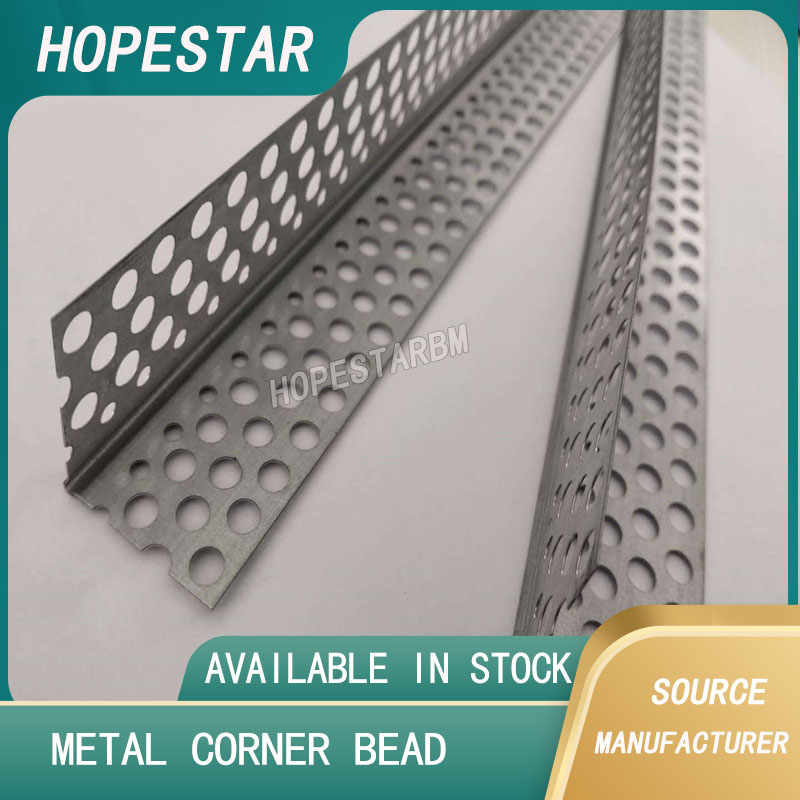
A metal corner bead is a finishing profile designed to protect the exposed outside corners of drywall, plasterboard, and rendered wall systems. It creates a straight edge, supports joint compound or plaster, and helps reduce damage caused by impact during daily use.
Although corner bead is a relatively small building component, its quality can strongly affect the appearance and durability of a finished wall. Contractors, distributors, and importers should therefore consider the material, profile design, dimensions, and installation method before selecting a product.
What Is Metal Corner Bead Used For?
External wall corners are vulnerable to cracking, chipping, and impact damage. Without a protective profile, it can be difficult to create a straight and consistent corner using joint compound alone.
Metal corner bead covers the edge where two wall boards meet. Its central nose forms a clean corner line, while the wings provide a surface for fixing and finishing.
It is commonly used around:
- Drywall partition corners
- Door and window openings
- Columns and boxed structures
- Bulkheads and soffits
- Residential interiors
- Offices, hotels, and commercial buildings
The correct corner bead can improve both installation efficiency and the final wall appearance.
Common Types of Metal Corner Bead
Different projects may require different profile designs.
Perforated corner bead has multiple holes along both wings. These openings allow joint compound or plaster to pass through and create a stronger bond with the wall surface.
Expanded metal corner bead uses a mesh-like wing design. It provides a large bonding area and is commonly used in plaster or render applications.
Bullnose corner bead creates a rounded outside corner instead of a sharp 90-degree edge. It is often selected for decorative interiors and areas where a softer appearance is preferred.
Archway corner bead is designed for curved openings and irregular shapes. Flexible sections allow the profile to follow an arch while maintaining a clean edge.
Buyers should confirm whether the product is intended for drywall compound, internal plaster, cement render, or another finishing system.
Why Choose a Metal Profile?
Metal corner bead provides a rigid guide that helps installers produce straight corners. It also reinforces the edge and distributes minor impact across a larger area.
Galvanized steel is frequently used because the zinc coating improves corrosion protection under normal indoor conditions. Aluminium corner bead offers low weight and good corrosion resistance, while stainless steel may be selected for more demanding environments.
The appropriate material depends on moisture exposure, finishing materials, local standards, and project budget.
Metal corner bead should not be continuously exposed to water unless its material and coating are suitable for that environment.
Important Specifications to Check
A corner bead should be compatible with the wall thickness and finishing system.
Important specifications include:
Material: Common options include galvanized steel, aluminium, and stainless steel.
Wing width: Wider wings provide a larger finishing area and may help create a smoother transition between the corner and wall surface.
Profile angle: Standard products are generally designed for 90-degree corners, while special profiles are available for other angles.
Length: Standard lengths should match common wall heights where possible to reduce joints and cutting waste.
Thickness: The profile should be rigid enough to maintain a straight corner without making installation difficult.
Perforation or mesh pattern: The design affects fixing, compound penetration, and adhesion.
For export orders, buyers should also confirm production tolerances, surface treatment, packing quantity, and carton or bundle strength.
Installation Quality Matters
Even a high-quality metal corner bead may perform poorly if it is installed incorrectly.
The wall corner should be clean, straight, and free from loose material. The profile must be cut accurately and positioned so that the nose remains vertical.
Depending on the system, the bead may be fixed with screws, nails, staples, crimping tools, adhesive, or joint compound. Fixings should be evenly spaced and should not distort the profile.
Joint compound or plaster should be applied in suitable layers, with each coat extended beyond the previous one to create a smooth transition. Sufficient drying time should be allowed before sanding or applying the final finish.
How to Evaluate Product Quality
A good metal corner bead should be straight and free from severe bending, twisting, sharp burrs, or damaged coating.
The nose should remain consistent along the entire length. Uneven profiles can create visible waves after finishing.
Perforations should be clean and regularly spaced. For galvanized products, the surface should appear uniform without serious bare areas or heavy rust.
Packaging is also important. Profiles that are loosely packed may bend during transport or container loading. Strong bundles or cartons help protect the product and simplify handling.
Choosing a Reliable Supplier
A professional metal corner bead manufacturer should be able to provide stable dimensions, consistent forming, and suitable export packaging.
Customization may include profile width, metal thickness, length, perforation pattern, material, labels, logos, and packaging design. Sample approval is recommended before mass production, especially when the product must match an existing local specification.
The best supplier is not always the one offering the lowest unit price. Product straightness, coating quality, dimensional accuracy, and packing strength can directly affect installation speed and customer satisfaction.
Conclusion
Metal corner bead is a practical solution for creating straight, durable, and professional-looking outside wall corners. It protects vulnerable edges while providing a guide for joint compound, plaster, or render.
To select the right product, buyers should compare the material, profile type, wing width, thickness, length, and finishing application. Working with an experienced manufacturer can help ensure consistent quality and specifications that suit the target market.
FAQ
Is metal corner bead suitable for drywall?
Yes. Metal corner bead is widely used to reinforce and finish external drywall corners.
Can metal corner bead rust?
Galvanized steel corner bead has a protective zinc coating, but prolonged moisture exposure may still cause corrosion. The installation environment should be considered when selecting the material.
Can corner bead sizes be customized?
Yes. Manufacturers can customize the material, length, wing width, thickness, perforation pattern, labels, and packaging.
C Channel Metal Stud
Galvanized Steel Stud: Benefits, Applications and Buying Guide
Related Article