What is an L Corner Bead?
In the realm of professional drywall finishing, the difference between a standard room and a high-end architectural space often comes down to how the edges are handled. While most people are familiar with the standard 90-degree corner beads used for external wall corners, the L corner bead is the specialized tool that professionals use to master the more challenging "terminations."
Whether you are finishing a window return, a door jamb, or a transition where drywall meets a different material like concrete or wood, the L corner bead is an indispensable component for a clean, durable finish.
What is an L Corner Bead?
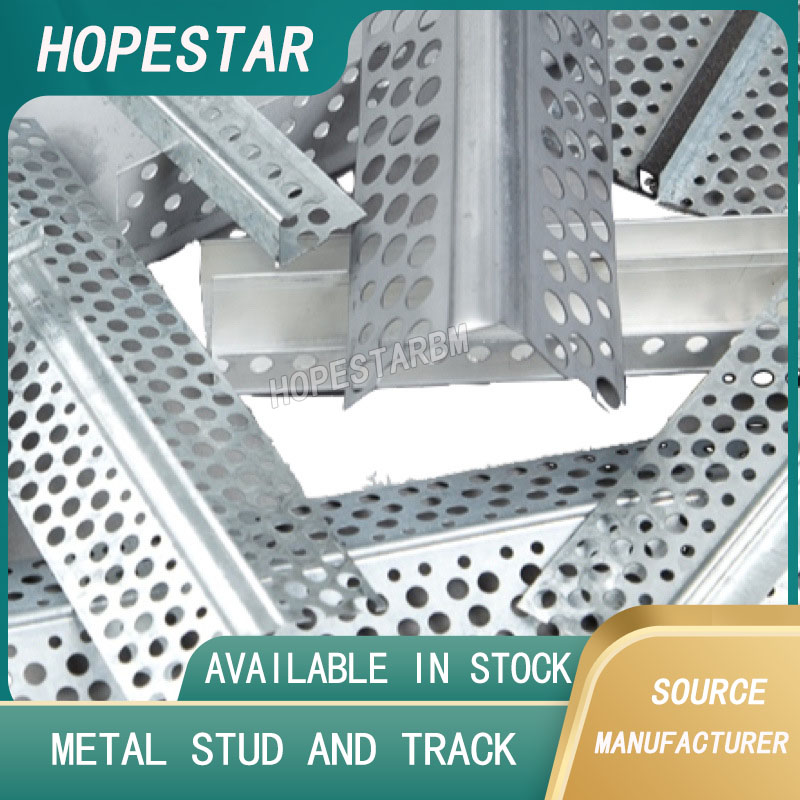
As the name suggests, an L corner bead features an "L-shaped" profile. Unlike the traditional "V" or "Angle" beads that have two equal flanges to wrap around an outside corner, the L-bead typically has one long perforated leg and one shorter "return" leg.
The perforated leg is designed to be covered with joint compound (mud), allowing the metal or vinyl to bond seamlessly with the drywall surface. The shorter leg provides a crisp, finished edge that protects the gypsum core of the drywall from crumbling or impact damage.
Core Applications: Where the L-Bead Shines
The versatility of the L corner bead makes it a favorite for several specific construction scenarios:
-
Window and Door Returns: When drywall wraps into a window or door opening rather than using traditional wood casing, an L-bead provides the sharpest possible edge.
-
Ceiling Transitions: It is often used where a drywall ceiling meets a masonry wall or a wood-paneled surface, creating a straight, finished line that hides the raw edge of the board.
-
Drop Ceilings and Soffits: For multi-level ceilings or decorative soffits, the L-bead ensures that the vertical and horizontal planes meet with geometric precision.
-
Enclosures: It is ideal for finishing the edges around recessed lighting, access panels, or structural steel beams that have been "boxed in" with drywall.
Material Choices: Metal vs. Vinyl
Selecting the right material for your L corner bead depends on the environment and the desired aesthetic.
-
Galvanized Steel L-Bead: This is the traditional choice for high-traffic commercial areas. Steel offers maximum impact resistance and is preferred in fire-rated assemblies. Its rigidity makes it easier to maintain a perfectly straight line over long distances, such as in high-ceiling foyers.
-
Vinyl (PVC) L-Bead: Vinyl has gained massive popularity due to its flexibility and resistance to moisture. It is the perfect choice for bathrooms, kitchens, or coastal regions where rust might be a concern. Additionally, vinyl L-beads are easier to staple into place and can be slightly bent to accommodate surfaces that aren't perfectly plumb.
Installation for a Professional Finish
To achieve a "Level 5" finish with an L corner bead, precision is key. Most contractors use a combination of spray adhesive and staples (for vinyl) or nails/screws (for metal) to secure the bead.
The secret lies in the "mudding" process. Because one side of the L-bead is a finished edge, you must apply the joint compound carefully so it tapers off into the flat drywall surface without leaving a hump. High-quality L-beads feature a slightly "knurled" or textured surface on the mud leg to ensure the compound sticks firmly and doesn't delaminate over time.
The "Shadow" Variant: Architectural L-Bead
For those seeking a more modern, minimalist look, the "Shadow L-Bead" (or reveal bead) is a popular variation. It functions like a standard L-bead but includes a small recessed channel. This creates a tiny "gap" or shadow line between the drywall and the adjacent surface, giving the illusion that the wall is floating.
Conclusion
The L corner bead is more than just a trim piece; it is a structural necessity for any modern interior. It protects vulnerable drywall edges while providing the clean, sharp lines that define professional craftsmanship. By choosing the right size and material for your L-bead, you ensure that your walls remain as beautiful and sturdy as the day they were installed.
Why Modern Ceilings Using Metal Furring Channels Outperform Traditional Framing
A Comprehensive Guide to Z Metal Corner Bead Sizes
Related Article