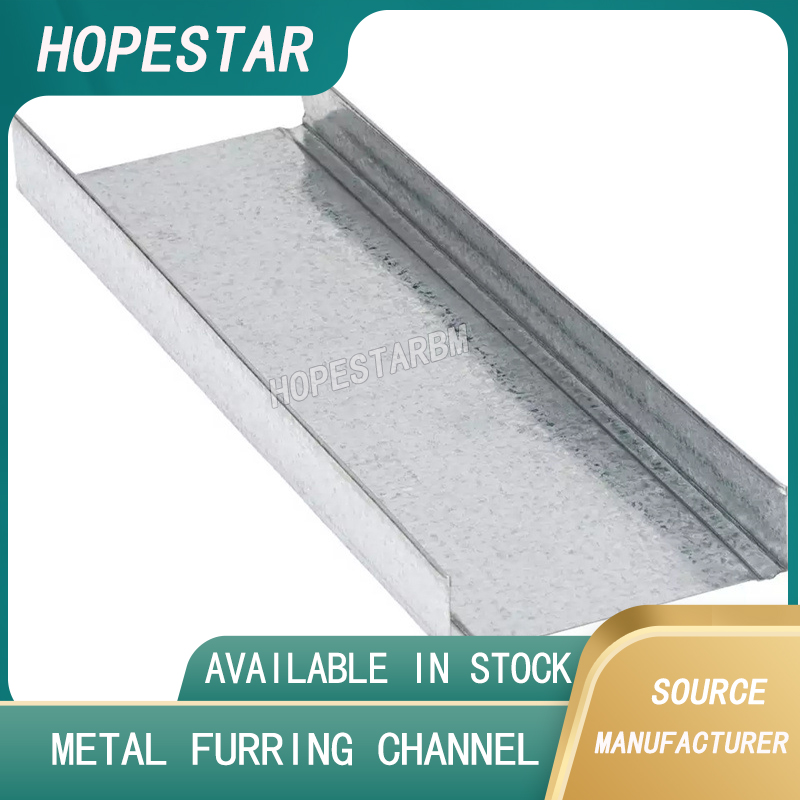
Is carrying channel and metal furring the same?
No, carrying channel and metal furring channel are not the same, although they work together in many ceiling systems. Here’s a clear explanation of the differences.
1. Carrying Channel
A carrying channel (also called main channel or primary channel) is the main load-bearing component in a suspended ceiling system.
Key features:
-
Installed first
-
Hung directly from the structural slab or beam
-
Carries the weight of furring channels, boards, lights, and accessories
-
Thicker and stronger than furring channels
-
Usually installed in one direction
Typical use:
-
Acts as the main support framework for ceilings
2. Metal Furring Channel
A metal furring channel (also called hat channel or secondary channel) is a secondary support profile.
Key features:
-
Fixed perpendicular to the carrying channel
-
Supports gypsum board or cement board directly
-
Lighter gauge steel
-
Shorter spacing than carrying channels
Typical use:
-
Provides fixing points for ceiling boards
-
Levels the ceiling surface
3. Main Differences at a Glance (Explained in Words)
-
Load role:
Carrying channel = primary load-bearing
Metal furring channel = secondary support -
Installation order:
Carrying channel first → furring channel second -
Thickness & strength:
Carrying channel is thicker and stronger -
Spacing:
Carrying channels are spaced wider
Furring channels are spaced closer
4. How They Work Together in a Ceiling
-
Carrying channels are suspended from the concrete slab using hangers or wires
-
Metal furring channels are clipped or screwed across the carrying channels
-
Gypsum boards are fixed directly to the metal furring channels
This cross-grid system improves:
-
Load distribution
-
Ceiling flatness
-
Long-span performance
5. When Only Metal Furring Is Used
In direct-fix ceilings (low height or light loads):
-
Metal furring channels can be fixed directly to the slab
-
No carrying channel is required
Metal Furring Size for Ceiling
What are the standard metal furring sizes?
Related Article