What Is a Perforated Corner Bead for Partition Walls? What Materials Are Available?
A perforated corner bead for partition walls is a commonly used auxiliary building accessory in lightweight partition systems. It is mainly installed at wall corners, door openings, window edges, and internal or external angles of partition walls. Its primary functions are protecting wall corners, enhancing strength, and ensuring straight, clean, and smooth edges. In gypsum board partitions and light steel keel wall systems, perforated corner beads are considered a standard component.
What Is a Perforated Corner Bead?
A perforated corner bead is usually manufactured in an L-shaped or V-shaped profile and made from metal or composite materials. Its surface features evenly distributed perforations. During installation, the corner bead is fixed onto the wall edge and then covered with joint compound or plaster. The perforations allow the compound to penetrate and bond firmly, resulting in straighter, stronger wall corners that are less prone to cracking or chipping.
Main Functions of Perforated Corner Beads
Wall corners are the most vulnerable areas in partition systems, as they are easily damaged by impact and daily wear. Installing perforated corner beads significantly improves impact resistance and reduces long-term damage. In addition, corner beads serve as alignment guides during installation, helping contractors achieve straight, sharp, and visually appealing corners while improving overall finishing quality.
Common Materials Used for Perforated Corner Beads
Galvanized Steel Perforated Corner Beads
This is the most widely used and cost-effective option. Galvanized steel offers high strength and rigidity, greatly enhancing corner protection. The zinc coating provides corrosion resistance, making it suitable for most interior partition walls and commercial projects.
Aluminum Perforated Corner Beads
Aluminum corner beads are lightweight, corrosion-resistant, and provide excellent surface smoothness. They are commonly used in projects with higher aesthetic requirements or in environments where rust resistance is important. Compared with galvanized steel, aluminum offers better flexibility but slightly lower impact strength.
Stainless Steel Perforated Corner Beads
Stainless steel provides outstanding corrosion resistance and high mechanical strength. These corner beads are ideal for humid environments or areas requiring long-term durability, such as hospitals, laboratories, or coastal buildings. However, they come at a higher cost and are typically used in premium construction projects.
PVC or Plastic Perforated Corner Beads
PVC corner beads are lightweight, easy to install, and completely rust-free. They are generally more economical and suitable for residential interiors or projects with lower impact resistance requirements. However, their durability and strength are lower than those of metal corner beads.
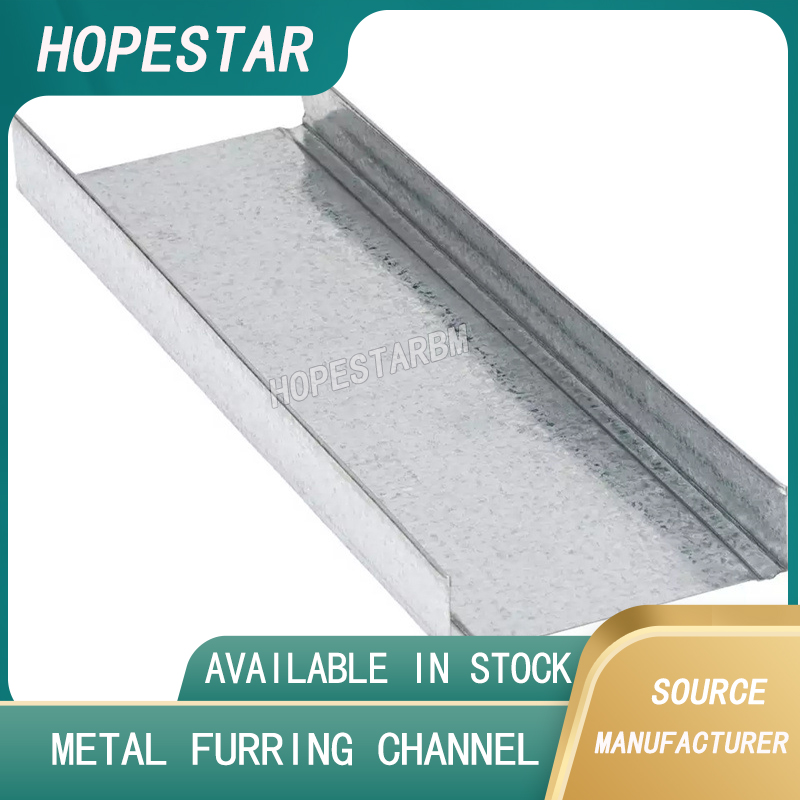
How to use metal furring channel?
What Makes Canadian Light Steel Keel Partition Walls Different?
Related Article