
What is the thickness of furring channel?
2024-08-16

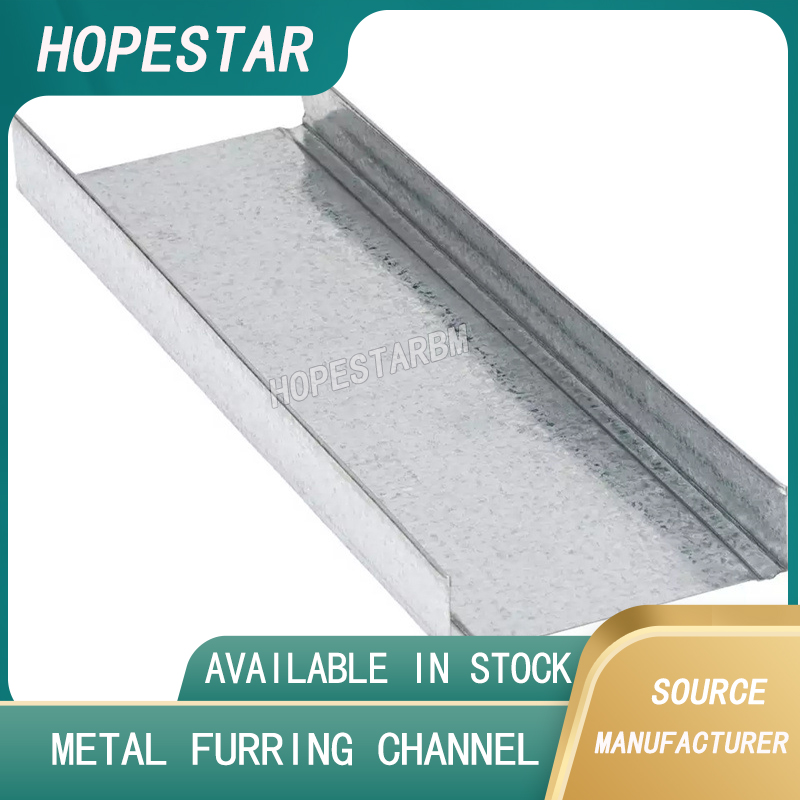
The thickness of a furring channel typically refers to the gauge of the steel used to manufacture it. The gauge (or thickness) can vary depending on the specific application, manufacturer, and the structural requirements of the project.
Common Thicknesses of Metal Furring Channels:
25 Gauge (0.018 inches or 0.45 mm thick):
25 Gauge (0.018 inches or 0.45 mm thick):
This is one of the most common thicknesses used in residential applications. It's lightweight yet strong enough to support most ceiling and wall installations.
20 Gauge (0.033 inches or 0.84 mm thick):
20 Gauge (0.033 inches or 0.84 mm thick):
Thicker and stronger than 25 gauge, 20 gauge furring channels are often used in commercial applications or in areas where additional structural support is required.
22 Gauge (0.027 inches or 0.69 mm thick):
22 Gauge (0.027 inches or 0.69 mm thick):
Sometimes used as a middle ground between 25 and 20 gauge, offering a balance between strength and weight.
Standard Dimensions:
Depth: The standard depth of a furring channel is usually 7/8 inch (22 mm), though other depths are available, such as 1-1/2 inches (38 mm) for heavier-duty applications.
Width: The width of the channel can vary but is typically around 1-1/4 inches (32 mm).
Application Considerations:
Structural Requirements: Thicker gauges are used where greater load-bearing capacity is required, such as in suspended ceilings or when supporting heavy ceiling finishes.
Code Compliance: Building codes may dictate the minimum thickness or gauge required for certain applications, especially in commercial or high-rise buildings.
When choosing a furring channel, it's important to consider the specific needs of your project, including load requirements, building codes, and the type of ceiling material being used.
Standard Dimensions:
Depth: The standard depth of a furring channel is usually 7/8 inch (22 mm), though other depths are available, such as 1-1/2 inches (38 mm) for heavier-duty applications.
Width: The width of the channel can vary but is typically around 1-1/4 inches (32 mm).
Application Considerations:
Structural Requirements: Thicker gauges are used where greater load-bearing capacity is required, such as in suspended ceilings or when supporting heavy ceiling finishes.
Code Compliance: Building codes may dictate the minimum thickness or gauge required for certain applications, especially in commercial or high-rise buildings.
When choosing a furring channel, it's important to consider the specific needs of your project, including load requirements, building codes, and the type of ceiling material being used.
What is a Metal Furring Used in Ceilings?
Is metal furring good for ceiling?
Related Article

Ceiling wall angle, also known as perimeter angle or L-angle, is an indispensable L-shaped metal profile for suspended drywall ceiling systems. Roll-formed from cold-rolled galvanized steel, ceiling wall angle is fixed along the wall perimeter to support the ends of main channels and furring channels,
Ceiling Wall Angle – Galvanized L-Shaped Perimeter Trim for Suspended Drywall Ceilings
Galvanized steel profiles are the foundational metal framing components widely used in modern interior construction. Roll-formed from cold-rolled steel coated with protective zinc layer, galvanized steel profiles cover a full range of shapes including C studs, U tracks, omega channels,
Galvanized Steel Profiles – Reliable Cold Rolled Framing for Drywall Walls and Ceilings

Metal furring channel for ceiling is a vital secondary framing component widely used in suspended ceiling and drywall ceiling systems. Roll-formed from cold-rolled galvanized steel, this lightweight metal profile works together with main channels, hangers and wall angles to create a level,
Metal Furring Channel for Ceiling – Galvanized Secondary Framing for Suspended Drywall Ceilings

Metal omega channel, also widely called omega furring channel or hat channel, is an indispensable secondary metal framing profile for modern suspended ceilings and drywall wall furring systems. Named after its distinctive Ω shape, this profile is roll-formed from cold-rolled galvanized steel
Metal Omega Channel – Galvanized Omega Furring Channel for Drywall Ceiling and Wall Framing