
z furring channels
2024-07-18
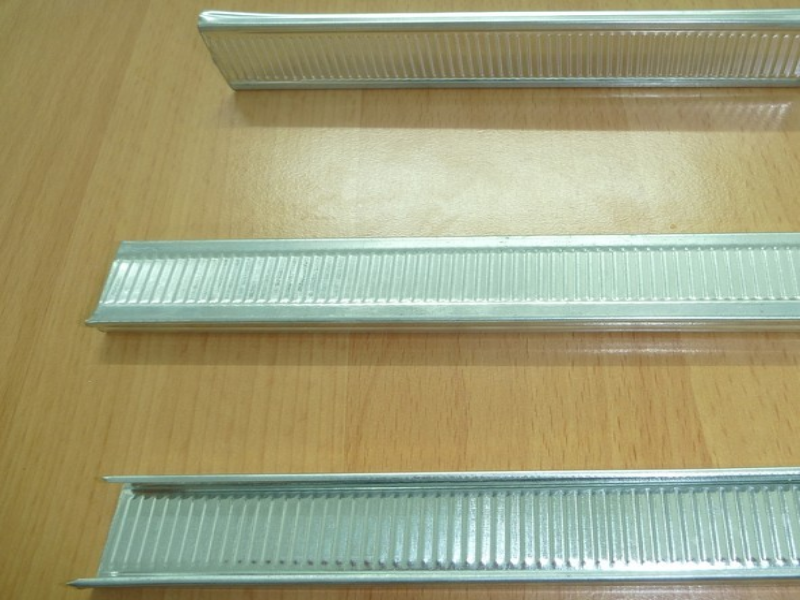
The size specifications of z furring channels are diverse to meet different construction needs. Common size specifications include height, width, thickness, and length.
1. Height: The height of z furring channels is generally determined based on the height requirements of the ceiling or partition wall. Common height specifications include 50mm, 75mm, 100mm, etc. Among them, the 50mm high keel is suitable for general indoor ceiling and partition construction; 75mm and 100mm high keels are suitable for occasions that require higher load-bearing capacity, such as large commercial spaces, exhibition halls, etc.
2. Width: The width of z furring channels is also determined according to construction requirements. Common width specifications include 20mm, 23mm, 25mm, etc. Among them, the 20mm wide keel is suitable for general indoor ceiling and partition construction; The 23mm and 25mm wide keels are suitable for situations that require higher strength and stability.
3. Thickness: The thickness of z furring channels directly affects their load-bearing capacity and service life. Common thickness specifications include 0.5mm, 0.6mm, 0.8mm, etc. Among them, the 0.5mm thick keel is suitable for general indoor ceiling and partition wall construction; 0.6mm and 0.8mm thick keels are suitable for situations that require higher load-bearing capacity and service life.
4. Length: The length is generally determined based on the actual situation of the construction site. Common length specifications include 3 meters, 4 meters, etc. In actual construction, cutting and splicing can be carried out as needed to meet the requirements of different lengths.
When choosing the size of z furring channels, the following principles need to be considered:
1. Choose the size according to the construction requirements. Different construction projects have different requirements for the height, width, and load-bearing capacity of ceilings and partitions, so it is necessary to choose the appropriate size of the keel. For example, in large commercial spaces or exhibition halls, it is necessary to choose keels with higher height and width to meet higher load-bearing capacity and stability requirements.
2. Consider the construction conditions. When selecting the size of the keel, it is also necessary to consider the actual situation of the construction site, such as space size, construction difficulty, etc. For construction sites with limited space, shorter keels can be chosen for easier installation and splicing; For projects with high construction difficulty, thicker keels can be chosen to improve their load-bearing capacity and stability.
3. Taking into account both cost and service life. There are differences in cost and service life among different sizes of keels. When selecting the size of the keel, it is necessary to comprehensively consider the balance between cost and service life. On the premise of ensuring construction quality, try to choose keel sizes that are cost-effective and have a longer service life.
1. Height: The height of z furring channels is generally determined based on the height requirements of the ceiling or partition wall. Common height specifications include 50mm, 75mm, 100mm, etc. Among them, the 50mm high keel is suitable for general indoor ceiling and partition construction; 75mm and 100mm high keels are suitable for occasions that require higher load-bearing capacity, such as large commercial spaces, exhibition halls, etc.
2. Width: The width of z furring channels is also determined according to construction requirements. Common width specifications include 20mm, 23mm, 25mm, etc. Among them, the 20mm wide keel is suitable for general indoor ceiling and partition construction; The 23mm and 25mm wide keels are suitable for situations that require higher strength and stability.
3. Thickness: The thickness of z furring channels directly affects their load-bearing capacity and service life. Common thickness specifications include 0.5mm, 0.6mm, 0.8mm, etc. Among them, the 0.5mm thick keel is suitable for general indoor ceiling and partition wall construction; 0.6mm and 0.8mm thick keels are suitable for situations that require higher load-bearing capacity and service life.
4. Length: The length is generally determined based on the actual situation of the construction site. Common length specifications include 3 meters, 4 meters, etc. In actual construction, cutting and splicing can be carried out as needed to meet the requirements of different lengths.
When choosing the size of z furring channels, the following principles need to be considered:
1. Choose the size according to the construction requirements. Different construction projects have different requirements for the height, width, and load-bearing capacity of ceilings and partitions, so it is necessary to choose the appropriate size of the keel. For example, in large commercial spaces or exhibition halls, it is necessary to choose keels with higher height and width to meet higher load-bearing capacity and stability requirements.
2. Consider the construction conditions. When selecting the size of the keel, it is also necessary to consider the actual situation of the construction site, such as space size, construction difficulty, etc. For construction sites with limited space, shorter keels can be chosen for easier installation and splicing; For projects with high construction difficulty, thicker keels can be chosen to improve their load-bearing capacity and stability.
3. Taking into account both cost and service life. There are differences in cost and service life among different sizes of keels. When selecting the size of the keel, it is necessary to comprehensively consider the balance between cost and service life. On the premise of ensuring construction quality, try to choose keel sizes that are cost-effective and have a longer service life.
galvanized steel size
galvanized steel furring channel
Related Article

Ceiling wall angle, also known as perimeter angle or L-angle, is an indispensable L-shaped metal profile for suspended drywall ceiling systems. Roll-formed from cold-rolled galvanized steel, ceiling wall angle is fixed along the wall perimeter to support the ends of main channels and furring channels,
Ceiling Wall Angle – Galvanized L-Shaped Perimeter Trim for Suspended Drywall Ceilings
Galvanized steel profiles are the foundational metal framing components widely used in modern interior construction. Roll-formed from cold-rolled steel coated with protective zinc layer, galvanized steel profiles cover a full range of shapes including C studs, U tracks, omega channels,
Galvanized Steel Profiles – Reliable Cold Rolled Framing for Drywall Walls and Ceilings

Metal furring channel for ceiling is a vital secondary framing component widely used in suspended ceiling and drywall ceiling systems. Roll-formed from cold-rolled galvanized steel, this lightweight metal profile works together with main channels, hangers and wall angles to create a level,
Metal Furring Channel for Ceiling – Galvanized Secondary Framing for Suspended Drywall Ceilings

Metal omega channel, also widely called omega furring channel or hat channel, is an indispensable secondary metal framing profile for modern suspended ceilings and drywall wall furring systems. Named after its distinctive Ω shape, this profile is roll-formed from cold-rolled galvanized steel
Metal Omega Channel – Galvanized Omega Furring Channel for Drywall Ceiling and Wall Framing